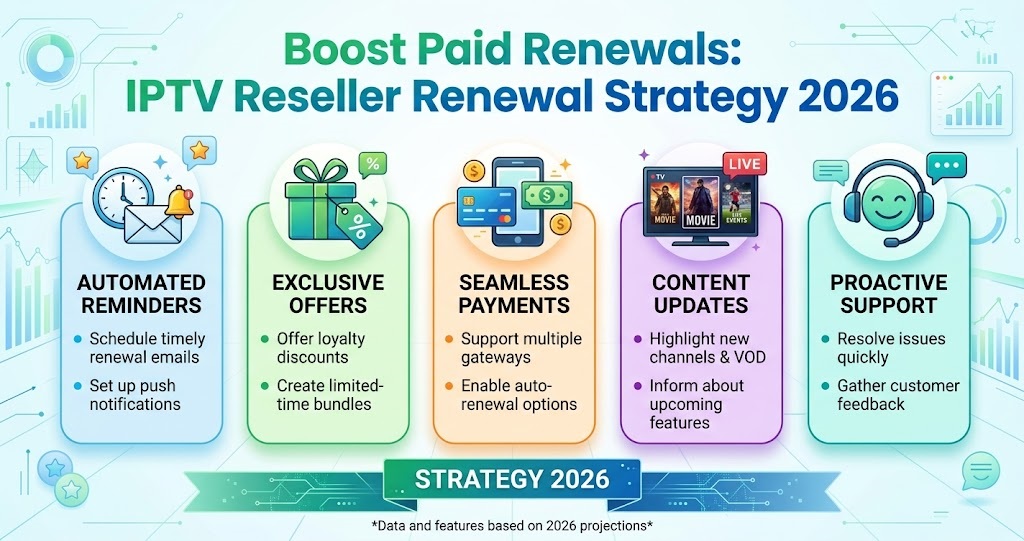
An IPTV Reseller Renewal Strategy is the set of decisions a reseller makes about when to contact subscribers before expiry, how much credit to hold in reserve, and what to say when a renewal doesn’t happen on time. Get those three things right and renewal rates climb without any extra selling. Get them wrong and you’re constantly chasing lapsed customers who assumed you’d remind them, or scrambling for credits you should have bought a week earlier.
Why renewals fail more often than acquisitions
Most IPTV reseller spend far more energy finding new subscribers than keeping existing ones. That’s backwards. A subscriber who’s already paid you once, already set up their device, and already watched content without major complaints is the easiest sale you’ll ever make again. The renewal fails not because the service was bad, but because nobody reminded them, or the reminder came too late, or the reseller ran out of credits at the exact moment the customer was ready to pay.
None of these are service failures. They’re process failures. And process failures are fixable in a way that “the stream buffered” never quite is.
Timing the renewal conversation
There’s a narrow window where a renewal message actually lands. Too early and the subscriber thinks you’re being pushy, or forgets by the time expiry actually arrives. Too late and they’ve already assumed the service ended, cancelled a direct debit in their head, or started looking at a competitor out of habit rather than dissatisfaction.
For most monthly subscribers, the useful contact points are:
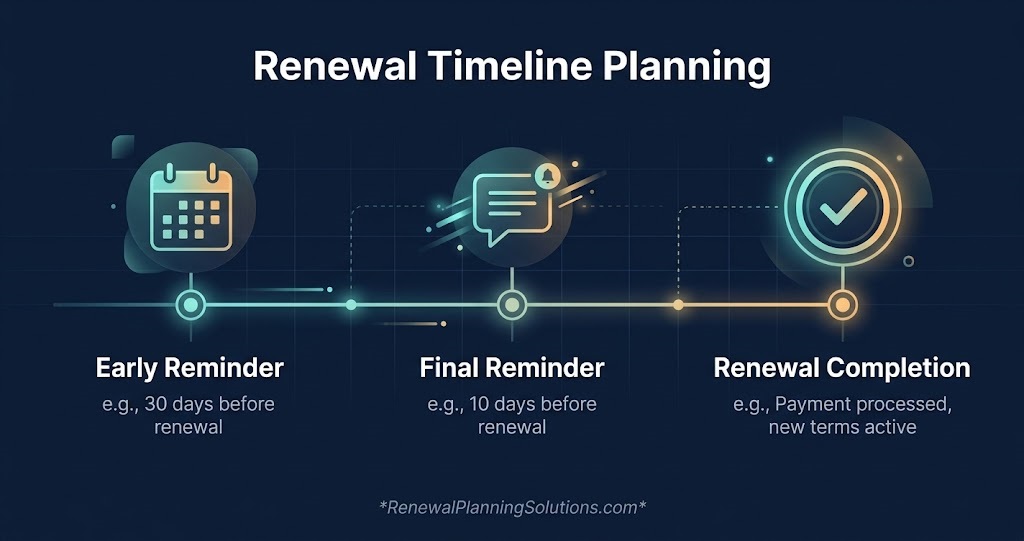
- Five to seven days before expiry: a low pressure heads up, not a hard sell
- One to two days before expiry: a clear reminder with the renewal price stated plainly
- On the day of expiry, if no response: a short message noting the line has paused, with an easy path back
Quarterly and annual subscribers need a longer runway, usually starting two to three weeks out, because larger payments involve more hesitation and sometimes require the subscriber to check their own budget first.
Building your IPTV Reseller Renewal Strategy around credit availability
A renewal strategy collapses fast if you run out of credits at the wrong moment. This is one of the most avoidable causes of lost subscribers, and it’s entirely within a reseller’s control. If ten renewals are due this week and you’re sitting on credits for three, you’re not managing a renewal strategy, you’re managing a shortage.
The practical fix is treating credit stock the way any retailer treats inventory. Look at how many active lines are due to expire over the next fourteen days, add a buffer for new sign ups you expect in that window, and top up before you’re forced to. Buying credits reactively, after a subscriber has already messaged asking to renew, means they’re sitting idle while you sort out your own supply. That delay is often the difference between a renewal and a subscriber who quietly moves on.
| Situation | What it signals | What to do |
|---|---|---|
| Credits run low with renewals still days away | Normal, plan ahead | Top up on your usual schedule |
| Credits run out with active renewal requests waiting | Reactive buying, risk of losing customers | Top up immediately, message affected subscribers |
| Large credit surplus most months | Overbuying or slow growth | Reassess batch size against actual monthly usage |
Pro tip: Keep a simple running note of renewal dates as you create each subscriber line, rather than relying on the panel’s expiry list alone. It takes seconds and means you’re never caught off guard by a cluster of renewals landing on the same day.
What to say when a renewal is late
Silence from a subscriber after expiry doesn’t always mean they’ve decided to leave. Sometimes it means the reminder arrived at a bad time, the payment method needs updating, or they genuinely forgot in the middle of a busy week. Treating every lapsed line as a lost customer, and moving straight to reselling the line to someone else, throws away subscribers who would have renewed with one more nudge.
A short, non-pushy follow up message a day or two after expiry recovers a meaningful share of these. Keep it factual: the line has paused, here’s the renewal cost, here’s how to pay. Avoid guilt tripping language or repeated messages in the same day, which tends to push undecided subscribers toward cancelling outright rather than renewing.
Pricing consistency and renewal trust
Subscribers who renew at a different price than they expected, without warning, tend not to renew a second time even if they pay this time. If your IPTV Panel pricing changes, tell existing subscribers before their next renewal, not at the point of payment. A five minute heads up preserves trust that a silent price jump destroys.
This matters more for resellers running white label panels, where subscribers see your brand and your pricing decisions directly, with no visibility into wholesale credit costs behind the scenes. Any pricing change you don’t explain reads as arbitrary to them, even when it’s driven by genuine cost increases on your end.
Sub-reseller considerations
If you operate as a sub-reseller, your renewal strategy depends partly on decisions made above you. Credit availability, pricing changes, and support response times from your parent reseller directly affect whether you can honour the renewal timeline you’ve promised your own subscribers. It’s worth understanding how IPTV reselling actually works at each level of the chain before building renewal promises you can’t always control from your position.
When a subscriber wants to cancel instead of renew
Not every non-renewal is a failure to prevent. Some subscribers genuinely no longer need the service, moved house, or changed how they watch television. Pushing hard for a renewal in these cases usually backfires and can generate complaints. It’s worth having a clear refund policy you can point to calmly, rather than improvising terms in the moment, which tends to create disputes that outlast the value of the renewal you were chasing.
Pro tip: Ask one simple question before assuming churn is preventable: “was it the service, or a change in your situation?” The answer changes whether a renewal offer is worth making at all.
Quick Renewal Strategy Checklist
- Map renewal dates for all active lines at least fourteen days ahead
- Send a low pressure reminder five to seven days before expiry
- Send a firm reminder with clear pricing one to two days before expiry
- Keep enough credits in reserve to cover the next two weeks of renewals
- Follow up once, briefly, within 48 hours of a missed renewal
- Announce pricing changes before they hit a renewal, not during it
- Check your FAQ page covers renewal and payment questions clearly, so subscribers can self-serve before contacting you
Frequently Asked Questions
How far in advance should I contact subscribers about renewal?
Start with a light reminder five to seven days before expiry for monthly plans, followed by a clearer reminder one to two days out. Annual and quarterly subscribers respond better to a longer lead time of two to three weeks.
Should I renew a subscriber automatically without asking first?
Automatic renewal without warning tends to generate disputes and refund requests, especially where pricing has shifted. A short heads up before charging, even for recurring arrangements, keeps the relationship on stable ground.
What if I don’t have enough credits when several renewals fall due at once?
This usually means credit purchases are reactive rather than planned. Reviewing upcoming expiry dates weekly and topping up ahead of the crunch avoids leaving paying customers waiting.
Is it worth chasing a subscriber who missed their renewal by a few days?
Yes, in most cases. A brief, factual follow up recovers subscribers who simply forgot or hit a payment hiccup, without pushing those who’ve genuinely decided to leave.
How do I handle a subscriber unhappy about a renewal price increase?
Explain the change plainly and, where possible, give notice before their next renewal rather than at the point of payment. Subscribers tolerate price changes far better than they tolerate surprises.

A working Reliable IPTV Reseller Panel Renewal Strategy comes down to timing reminders sensibly, keeping enough credit stock to cover what’s actually due, and following up on missed renewals without pressuring subscribers who’ve genuinely moved on. None of this requires new tools or a bigger support team, just a habit of checking expiry dates before they become emergencies. Start by mapping your renewal dates for the next two weeks and you’ll already be ahead of most panels operating on guesswork.