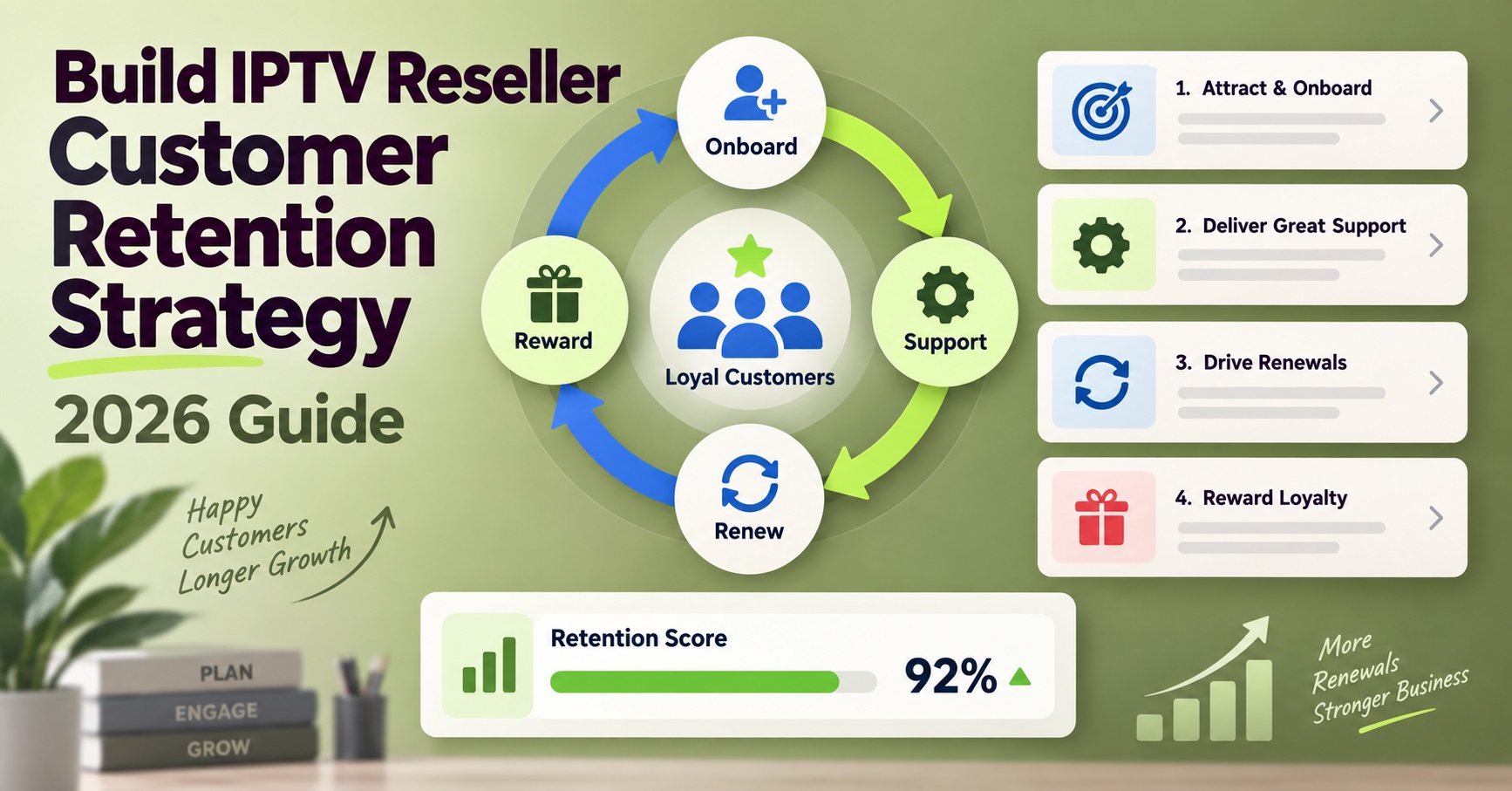
Retaining subscribers starts with IPTV reseller customer retention practices that go well beyond sending a renewal text before an expiry date. Most IPTV panel resellers who struggle with churn have already got their renewal messaging sorted; what they’re missing is the groundwork that makes a subscriber want to stay in the first place. That groundwork sits in four places: what you promise at signup, how you handle support when something breaks, whether the subscriber’s device was ever properly suited to the service, and whether you’re actually tracking who leaves and why.
Retention Starts Before the First Renewal, Not At It
By the time a renewal reminder lands in someone’s inbox, the decision to stay or go has usually already been made weeks earlier. A subscriber who had a smooth first month, understood what they were paying for, and never had to chase you for help is going to renew almost automatically. A subscriber who had to ask three times why a channel dropped out, or who never quite understood what “credits” or “lines” meant, is the one a renewal message won’t save.
This matters because a lot of reseller effort goes into polishing the renewal message itself, the discount wording, the send timing, the follow-up cadence, while the actual causes of churn sit upstream of all that. If you’re only working on the reminder, you’re treating a symptom.
Setting Service Expectations That Don’t Come Back to Bite You
Vague promises create disappointed subscribers, and disappointed subscribers don’t renew. The fix isn’t overselling less; it’s being specific about what a subscriber is actually getting, in language they’ll remember when something goes wrong.
A few areas worth being explicit about at the point of sale:
| Expectation area | What to set clearly |
|---|---|
| Device support | Which apps or boxes the line has actually been tested on |
| Buffering causes | That home broadband speed and Wi-Fi strength affect playback, not just the panel |
| Support hours | When a human is actually available, and what the realistic response time is |
| Content scope | That content availability can shift and isn’t a fixed guarantee |
| Multi-device use | Whether one line covers one device at a time or several |
Pro tip: Send a short setup confirmation message once a subscriber’s first device is working, not just an order confirmation. It closes the loop and gives you a natural point to mention what to do if something stops working later.
Subscribers who were told upfront that buffering can be a broadband issue, not just a panel issue, are far less likely to blame you outright and cancel in frustration. The ones who were never told anything default to assuming every problem is your fault.
Support Response Is a Retention Lever, Not a Cost Centre
Fast replies matter, but speed alone doesn’t fix retention if the same subscriber has to explain their problem from scratch every time they message you. A support interaction that resolves an issue well tends to increase loyalty more than an issue that never happened at all, simply because the subscriber now trusts that you’ll sort things out.
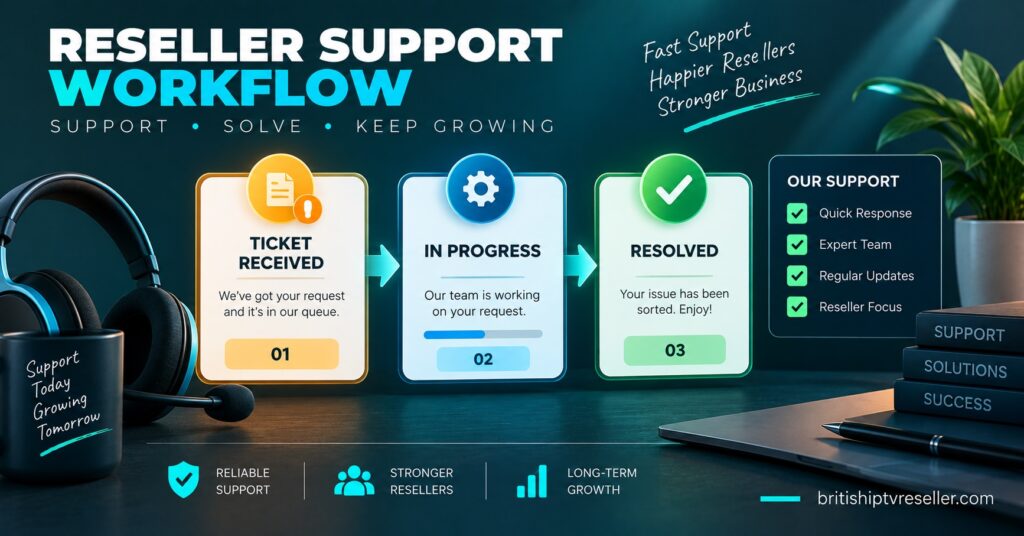
A few practical habits make support work harder for retention:
Keep a simple note against each subscriber line recording what device they use and any recurring issue they’ve had. When they message again, you’re not starting cold.
Separate genuine technical faults from one-off buffering blips. Treating every complaint as a major incident wastes time; treating every complaint as nothing makes subscribers feel dismissed.
Give subscribers a clear escalation path when the first response doesn’t fix things. Nothing erodes trust faster than a support thread that just goes quiet.
If you’re running support across multiple people or shifts, make sure handovers include context. A subscriber repeating themselves to a second agent after already explaining the problem once is a common, avoidable churn trigger.
Device Fit: The Overlooked Cause of Early Cancellations
A meaningful share of early cancellations trace back to a mismatch between the subscriber’s device and how the service was set up for them, not to the underlying panel or infrastructure at all. Someone running an older Android box with limited processing power will have a different experience to someone on a current-generation Firestick, even on identical credits.
Warning signs worth checking for on a struggling line:
Pro tip: Ask which app the subscriber is actually using before troubleshooting anything else. A misconfigured or outdated player app causes more support tickets than genuine stream problems.
| Warning sign | Why it matters |
|---|---|
| Frequent app crashes on one specific device | Often points to the player app, not the stream itself |
| Complaints only during peak evening hours | Usually a home broadband capacity issue, not a panel fault |
| Subscriber switched devices mid-subscription | New device may need reconfiguration you weren’t told about |
| Repeated buffering on 4K content specifically | Connection speed may not support the bitrate being requested |
Getting device fit right at setup, and rechecking it if a subscriber mentions switching hardware, prevents a category of cancellations that has nothing to do with your service quality and everything to do with an unresolved technical mismatch.
Cohort Tracking: Knowing Who Leaves and When
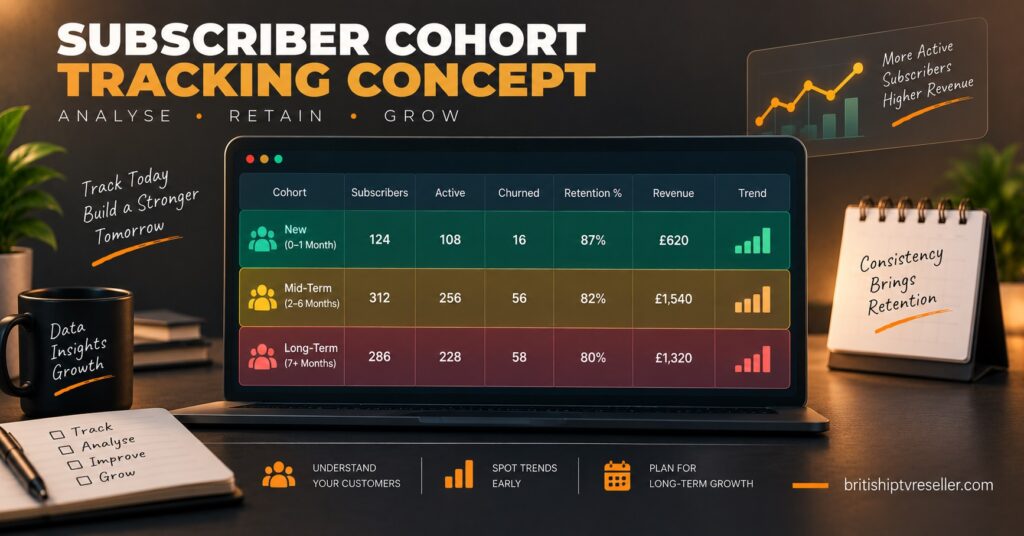
Most UK IPTV resellers can tell you their total subscriber count, but far fewer can tell you which group of subscribers is actually cancelling and at what point in their subscription. Without that, every retention effort is a guess.
A cohort, in this context, is simply a group of subscribers who joined around the same time or through the same route, tracked together so you can see how their retention compares to other groups. You don’t need dedicated software to start this. A basic spreadsheet with join date, device type, and cancellation date (if applicable) is enough to reveal patterns.
Patterns worth watching for:
Subscribers who cancel within the first two to three weeks usually point to a setup or expectation problem, not a service quality problem. That’s a signal to review your onboarding, not your infrastructure.
Subscribers who renew once and then drop off at the second cycle often reveal a value perception issue, they got what they paid for the first month but didn’t see enough reason to continue.
Subscribers who leave in clusters tied to a specific device type or app version usually point to a technical compatibility issue worth investigating directly.
Sub-Reseller Considerations
If you’re operating as a sub-reseller under a parent panel, your retention data is your main defence against being blamed for problems that originate further up the chain. Keeping your own record of which subscribers had issues, when, and what was done about it gives you something concrete to point to if a parent reseller’s infrastructure causes a wave of complaints you didn’t cause yourself.
Where This Fits Alongside Your Existing Panel Setup
None of this replaces solid infrastructure. A IPTV reseller panel with dependable uptime and support still matters enormously, since no amount of onboarding polish saves a subscriber base from a genuinely unstable service. What retention work does is make sure the good service you’re already paying for actually gets recognised and rewarded with renewals, rather than lost to preventable friction.
If you’re still working out the basics of how the reseller side of the business functions, it’s worth reading through how IPTV reselling actually works before building retention processes on top of it. It’s also worth having a clear, easy-to-find refund policy, since subscribers who know they have a fair way out if something goes wrong are, counterintuitively, often more willing to stick around and give you a chance to fix a problem first.
Common Mistakes That Quietly Increase Churn
| Mistake | Better approach |
|---|---|
| Treating every complaint the same way | Separate technical faults from broadband or device issues before responding |
| No record of past subscriber issues | Keep a simple note per line so support has context |
| Assuming all cancellations are price-related | Check timing and device patterns before assuming it’s about cost |
| Only reviewing retention at renewal time | Track cancellations across the whole subscription period |
Frequently Asked Questions
Why do subscribers cancel even when the service is technically working fine?
Often it’s not the service itself but the experience around it, unclear expectations at signup, slow or inconsistent support, or a device that was never properly suited to the subscription. Technical uptime alone doesn’t guarantee a subscriber feels the service is worth continuing.
Is cohort tracking only useful for large reseller operations?
No. Even a handful of subscribers tracked in a simple spreadsheet by join date and device type can reveal whether cancellations cluster around a specific cause, which is useful at almost any scale.
Should support response time be the main retention metric I focus on?
It’s one factor, but not the only one. A fast reply to an unresolved or poorly explained issue doesn’t retain a subscriber as well as a slightly slower reply that actually fixes the problem and gives them confidence in future support.
How soon should I check in with a new subscriber after their first setup?
Shortly after their first device is confirmed working is a reasonable point, since it lets you catch device-fit issues early rather than waiting for a complaint to surface weeks later.
Does device fit really affect renewal decisions?
Yes, in a meaningful number of cases. A subscriber blaming “the service” for what’s actually an outdated app or a weak home connection will often cancel rather than troubleshoot, especially if no one has explained the difference to them.
Reseller Retention Checklist
- Confirm the subscriber’s device and app before their first stream, not after a complaint
- Set clear expectations on buffering causes, support hours and content scope at signup
- Keep a short note per subscriber line covering device type and any past issues
- Give every support thread a clear escalation route if the first reply doesn’t resolve things
- Track join dates, device types and cancellation points in a simple spreadsheet
- Review cancellation patterns by timing (early drop-off vs second-cycle drop-off), not just totals
- Revisit device fit whenever a subscriber mentions switching hardware
IPTV reseller panel customer retention comes down to fixing the things that happen long before a renewal date ever arrives: clear expectations at signup, support that resolves rather than just replies quickly, devices that were properly matched to the subscription, and a habit of actually tracking when and why subscribers leave. None of this requires new software or a bigger team, just a shift from reacting at renewal time to watching the full subscriber journey. Start with the cohort spreadsheet and the support notes; both are simple to set up and will tell you more about your actual churn causes than any renewal message ever could.