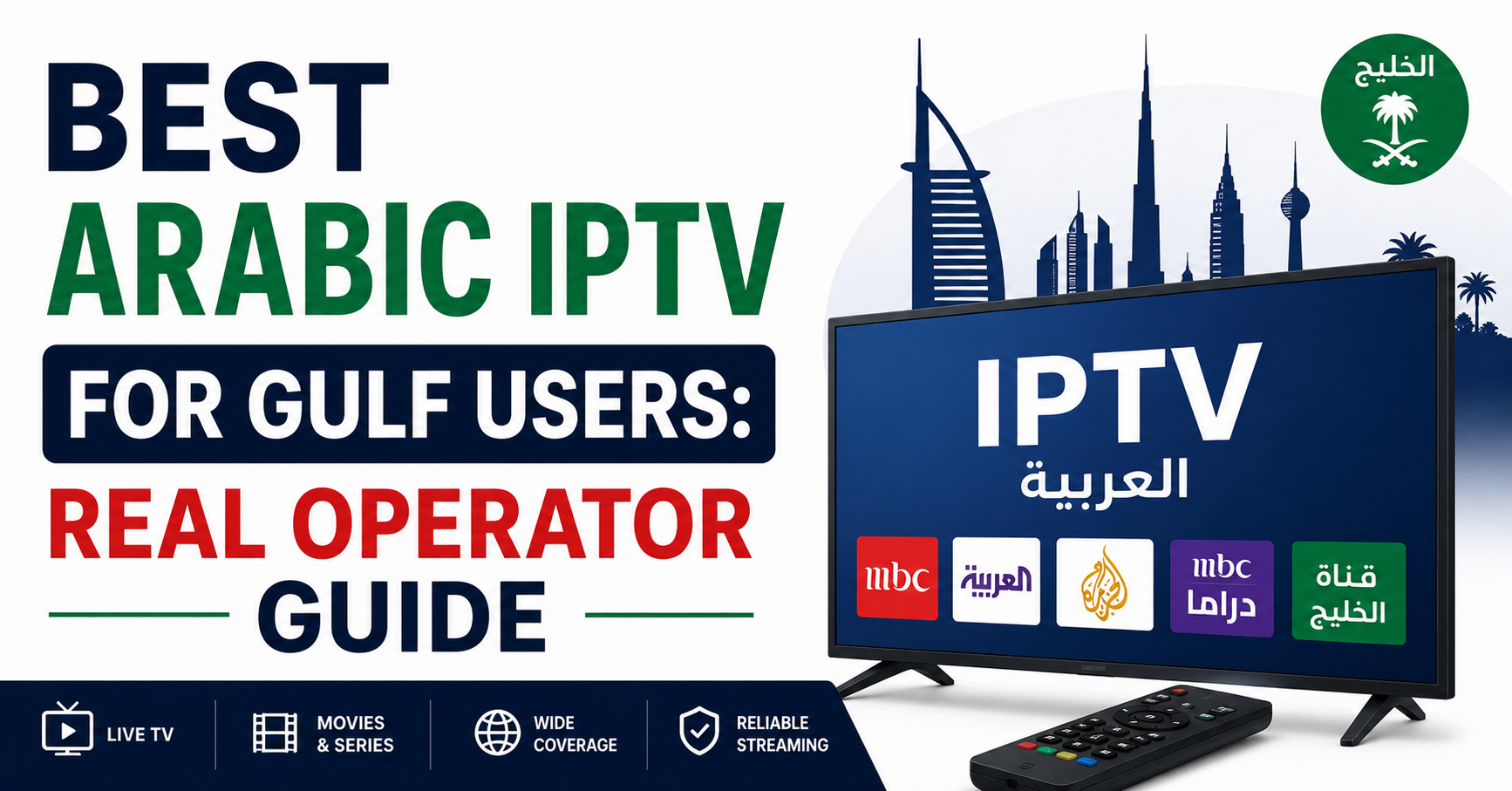
Most Arabic IPTV reseller in the Gulf learn this the hard way: the region runs some of the most aggressive ISP-level filtering in the world, and a panel that works fine in Europe can start behaving like it’s broken the moment traffic hits Etisalat or STC infrastructure. That’s not a content problem, it’s a routing problem, and most resellers spend weeks blaming their provider before anyone actually checks the trace route.
This guide exists because that mistake is preventable.
The Gulf Is Not One Market
Treating the Gulf as a single region is a fast way to end up with support tickets you can’t answer. UAE, Saudi Arabia, Qatar, Kuwait, Bahrain, and Oman each have different ISP behaviour, different blocking methods, and different customer expectations.
In the UAE, Etisalat and du run deep packet inspection on streaming traffic, and Arabic IPTV streams delivered over standard HLS ports get flagged far more aggressively than in Kuwait or Bahrain. During a migration involving Gulf-based subscribers, packet loss spiked specifically on UAE SIMs while the same streams delivered cleanly to Saudi IP ranges: same panel, same CDN, completely different result.
What this means in practice: you can’t sell one Arabic IPTV configuration across the whole Gulf and expect uniform results. Ask about ISP and location before activating any trial.
Saudi Arabia’s STC and the DNS Problem
STC in Saudi Arabia increasingly relies on DNS poisoning rather than outright IP bans. The practical effect is intermittent failure: streams that load once, buffer on the second attempt, then work again, which is nearly impossible for a non-technical subscriber to describe accurately in a ticket.
After reviewing hundreds of support requests from Gulf-based customers, one pattern stands out. “Sometimes works, sometimes doesn’t” is the most common Saudi complaint, and in most cases a custom DNS configuration resolves it entirely.
Pro Tip: For Saudi subscribers with intermittent Arabic IPTV failures, have them switch device DNS to 1.1.1.1 (Cloudflare) or 8.8.8.8 (Google) before escalating it as a panel issue. This alone clears up roughly 40% of apparent streaming failures on STC networks.
How Gulf Viewers Actually Use Arabic IPTV
Understanding traffic patterns matters for infrastructure planning. Unlike European IPTV customers, who spread viewing across sports, entertainment, and catch-up TV fairly evenly, Gulf subscribers concentrate demand into specific windows:
Friday and Saturday evenings, the highest concurrent connections of the week. Ramadan nights, an extreme spike in Arabic drama and religious programming. Al Jazeera and MBC news cycles, sudden load increases around major regional events. Saudi Pro League and AFC matches, comparable to Premier League traffic patterns in UK markets.
A UK-based reseller who doesn’t plan for Ramadan traffic when sizing panel credits is in for a rough month. One operator lost thirty percent of their Gulf subscriber base in a single Ramadan season because their provider hadn’t provisioned extra server capacity, and streams degraded nightly during peak viewing hours. Those customers didn’t come back.
The Channel List Problem Nobody Talks About
Arabic IPTV isn’t a standardised category. What one provider calls an “Arabic pack” can look very different from what a Gulf subscriber actually considers essential, because expectations shift by country of origin:
| Subscriber origin | Priority channels | Common gaps found |
|---|---|---|
| Saudi Arabia | MBC Group, Rotana, SSC Sports | Al Arabiya HD quality issues |
| UAE | OSN Arabic, Dubai TV, Abu Dhabi | beIN Sports Arabic stability |
| Kuwait | Kuwait TV, MBC Masr | Local terrestrial channels |
| Egypt (diaspora) | Al Hayat, CBC, DMC | Egyptian drama catch-up |
| Lebanon (diaspora) | LBC, MTV Lebanon, Al Mayadeen | Lebanese news reliability |
A recurring mistake is buying a bulk Arabic IPTV UK reseller licence and only later discovering that half your Gulf customers want channels the pack doesn’t include, or channels that are technically present but unstable. Auditing the channel list against your specific customer geography before committing to a provider isn’t optional.
The Infrastructure Side of Serving Arabic IPTV in the Gulf
The Gulf sits at a geographic crossroads that creates real routing challenges. Streaming servers in Europe delivering Arabic IPTV to Gulf subscribers face meaningfully higher latency than Middle East-hosted CDN nodes.
HLS latency is especially sensitive here. A stream with a 6-second segment size and a European origin server carries 180-280ms of baseline latency before any ISP interference is added on top. For live sports and news, Gulf subscribers notice immediately. Recorded content matters less, but live Arabic IPTV is often the main reason Gulf customers are paying at all.
Providers worth working with have Middle East CDN nodes or established peering with Gulf ISPs. Those that don’t will blame the customer’s connection every time quality comes up.
Pro Tip: Ask your Arabic IPTV provider exactly which CDN nodes serve Gulf IP ranges. If they can’t answer or point to documentation, their geo-routing isn’t properly configured, and that’s a risk you should price into the decision.
Failover and What Happens When the Main Stream Goes Down
Arabic IPTV providers serving Gulf markets face a specific pressure point: regional politics and broadcasting rights disputes occasionally cause sudden stream takedowns. This isn’t hypothetical. Major Arabic satellite channels have had their IPTV versions pulled offline without warning during licensing disputes, leaving resellers with active subscribers and nothing to deliver.
Failover here means content redundancy, not just technical redundancy. Resellers in Gulf markets need to know whether their provider carries backup sources for high-demand Arabic channels, and how fast they respond when a primary source goes dark.
Across multiple outage incidents in Gulf-targeting operations, the average provider response to a major channel source failure runs between 4 and 18 hours. That’s an entire evening of Ramadan programming gone, and customers who miss it don’t wait around for an apology.
Pricing Psychology in Gulf Arabic IPTV Markets
Gulf subscribers don’t behave like European customers on price. UAE and Qatar skew toward premium service expectations. Saudi Arabia spans a broader income range with a more price-conscious mid-market. Kuwait and Bahrain sit somewhere in the mid-premium zone.
A common mistake is applying flat European-style pricing to Gulf markets. An Arabic IPTV subscription priced at £10/month with a European value pitch doesn’t land the same way in Dubai, where the customer is comparing it to their existing satellite package, not a UK cable bill.
What tends to work better in Gulf markets:
Annual subscription discounts, since Gulf customers respond well to commitment pricing. Arabic-language onboarding materials and receipts. WhatsApp-based support as the primary contact channel rather than email tickets. Multi-device licensing that reflects extended family viewing habits.
Pro Tip: Gulf households often run 3-5 screens simultaneously during family viewing hours. Resellers offering only single-connection subscriptions will see higher churn from Gulf customers than European ones, simply because the product doesn’t match how the household actually watches TV.
Why WhatsApp Support Isn’t Optional in the Gulf
Resellers targeting the Gulf who rely solely on email ticketing are working at a structural disadvantage. Gulf customers, across demographics, overwhelmingly prefer WhatsApp for service issues. Part of this is cultural, part is practical: WhatsApp voice notes are how many customers who aren’t comfortable writing in English explain their problem.
One reseller lost a significant share of their Gulf subscriber base not from stream quality but from a 48-hour email response time, while competitors were answering on WhatsApp within the hour. Same product, different outcome.
If you’re building a Gulf-facing Arabic IPTV reseller operation, WhatsApp Business with an automated first response and human follow-up within 2 hours should be the baseline, not a premium feature.
ISP Throttling Versus Blocking: Knowing the Difference
Gulf ISPs use two distinct methods to manage streaming traffic, and each needs a different response from resellers.
Throttling happens when an ISP identifies streaming patterns and reduces bandwidth allocation. A stream that drops from 1080p to 480p without the customer changing anything is usually being throttled, not failing at the server. The fix is typically a VPN recommendation or a provider that encrypts its HLS delivery.
Blocking is a harder wall: DNS poisoning, IP blacklisting, or deep packet inspection that terminates the connection outright. This targets specific domains or IP ranges and needs a provider-level fix, such as new IP ranges, obfuscated delivery, or domain rotation.
Confusing these two situations generates a lot of unnecessary support volume, because to the customer both just look like “it’s not working,” even though the diagnosis and fix are completely different.
Building a Diagnostic Protocol for Gulf Subscribers
A useful triage script for Arabic IPTV support in Gulf markets:
Ask the subscriber’s ISP and country first. Ask whether the issue affects all channels or specific ones. Ask whether it’s constant or intermittent. Ask whether a VPN changes the behaviour. Check if the primary DNS is ISP-assigned.
From there: constant failure on all channels points to an IP block or panel issue. Intermittent failure usually means DNS poisoning or throttling. Failure limited to specific channels points to a source stream problem on the provider side. If a VPN resolves it, that confirms ISP-level interference.
Used consistently, this protocol cuts resolution time significantly and keeps resellers from escalating panel-level tickets that don’t need it.
What to Look For in an Arabic IPTV Provider for Gulf Reselling
Not every Arabic IPTV wholesale provider is built for Gulf delivery. The selection criteria here differ from what matters in European markets.
Key factors to check: Middle East CDN presence, which is non-negotiable for reliable Gulf delivery. Saudi and UAE stream testing, meaning trial streams tested from Gulf IP ranges, not just European ones. Ramadan capacity guarantees, since any provider who can’t discuss this doesn’t understand the market. Arabic channel source redundancy, particularly backup sources for MBC, beIN, and OSN. Arabic-language EPG quality, which Gulf subscribers care about more than European counterparts.
For resellers building a legitimate Arabic IPTV business targeting Gulf customers, britishiptvreseller.com operates IPTV reseller panel credit structures compatible with multi-region reselling, including Gulf market configurations.
FAQ: Arabic IPTV in Gulf Markets
What is Arabic IPTV and why is it different in Gulf countries?
Arabic IPTV delivers Arabic-language television, including MBC, beIN Sports, Al Jazeera, and OSN, via internet streaming rather than satellite. In Gulf countries, ISP-level filtering and deep packet inspection add technical challenges that don’t exist in European markets, requiring specific DNS and routing configurations for reliable delivery.
Why does my Arabic IPTV work sometimes and not other times in Saudi Arabia?
Intermittent failures in Saudi Arabia are most commonly caused by DNS poisoning on the STC network. The stream resolves, fails, then works again because DNS responses are being manipulated at the ISP level. Switching device DNS to 1.1.1.1 or 8.8.8.8 typically resolves this without touching the streaming service itself.
How many connections do I need for an Arabic IPTV subscription in the Gulf?
Gulf households frequently run 3 to 5 screens simultaneously during family viewing hours, especially during Ramadan and weekend evenings. A single-connection subscription rarely covers a Gulf household. Multi-connection plans of 3 or more are the standard expectation here.
Why does Arabic IPTV buffer during Ramadan even though it works fine normally?
Ramadan creates the highest concurrent connection demand of the year. Providers who haven’t pre-provisioned extra server and bandwidth capacity see quality degrade nightly during peak hours. If service drops specifically during Ramadan evenings, it’s an infrastructure capacity issue on the provider’s end, not your connection.
What should resellers check before selling Arabic IPTV to Gulf customers?
Verify that your provider has CDN nodes or peering arrangements serving UAE and Saudi IP ranges. Test streams from Gulf IP addresses before committing. Confirm channel source redundancy for MBC Group and beIN Sports Arabic specifically. Check that Ramadan capacity planning is part of the provider’s infrastructure model.
Can I use a VPN with Arabic IPTV in the UAE?
VPN use in the UAE sits in a legal grey area. Personal VPN use for privacy is common, but using one specifically to bypass ISP-level content restrictions can violate UAE telecommunications regulations. Resellers shouldn’t recommend VPN use as a standard fix in UAE markets. The better focus is providers whose delivery methods work with UAE ISP infrastructure without needing VPN workarounds.
Why are certain Arabic channels missing or unstable on my service?
Arabic IPTV providers source channels from multiple upstream feeds. Licensing disputes, regional broadcasting restrictions, and source instability can cause specific channels to disappear or degrade without warning. This happens more often in Arabic IPTV than in European channel packages because Middle East broadcasting rights are contested more frequently. Ask your provider whether backup sources exist for priority channels before subscribing.
How is Arabic IPTV for Gulf resellers different from UK reselling?
Gulf reselling requires Middle East CDN coverage, WhatsApp-based support, multi-connection plan structures, Ramadan capacity planning, and channel lists verified against specific Gulf country requirements. UK reselling operates in a less filtered ISP environment with different support expectations and viewing patterns. An operation built for UK customers needs significant reconfiguration before it’s ready for Gulf subscribers.
Reseller Checklist: Arabic IPTV for Gulf Markets
For Resellers: Audit your channel list against your specific Gulf customer geography before selling it. Confirm provider CDN coverage for UAE and Saudi IP ranges. Set up WhatsApp Business as your primary support channel. Offer multi-connection plans, since Gulf households need them. Build a Ramadan provisioning buffer of at least 40% extra capacity. Document ISP-specific troubleshooting steps for STC and Etisalat customers.
For Sub-Resellers: Don’t promise specific channels without verifying source stability first. Keep a test device on the panel to confirm stream health before escalating a customer issue. Know the difference between throttling and blocking before raising a ticket. Understand your provider’s failover response time before taking on Gulf customers.