It was a Saturday afternoon. Three clients messaged me within ten minutes. Same complaint: streams were buffering, audio was cutting out, and one bloke was absolutely livid because he’d paid for a month and got three watchable days. I’d trusted a provider who oversold their server capacity, and I was the one left apologising.
That moment taught me more about the IPTV subscription business than any YouTube tutorial ever could. If you’re here because you want to get an IPTV subscription, or better yet, sell them, this guide is the honest version nobody else is writing.
What Is an IPTV Subscription and How Does It Work?
An IPTV subscription gives you access to live television, on-demand content, and catch-up programming delivered entirely over your internet connection, no satellite dish, no cable box. The content is streamed from a remote server directly to your device, whether that’s a Firestick, MAG box, Smart TV, or STBEmu on an Android device.
From a technical standpoint, every subscription is essentially a set of login credentials, a username, password, and server URL, that connect to a provider’s streaming infrastructure. The two most common formats you’ll encounter are M3U playlists and Xtream Codes API connections. M3U works with almost any player. Xtream Codes gives you a proper login-based experience and is what most serious panels run on.
The quality of your experience depends almost entirely on the server behind those credentials. A provider running quality CDN infrastructure with anti-freeze technology will deliver stable streams even during high-traffic periods, while a cheap provider will fall apart the moment a major football fixture kicks off.
Pro Tip: Always test a subscription with a trial line during peak hours, specifically a Saturday afternoon when football demand is highest. If it buffers then, it’ll always buffer.
Getting Set Up With an IPTV Subscription: Personal Use vs Reselling
There are two routes: buying one for personal use, or getting set up as a reseller to sell subscriptions yourself.
For personal use, the process is fairly straightforward. You find a provider, request a trial, test the streams on your preferred device, then purchase. Most providers offer monthly, quarterly, or annual plans. The key is testing before committing, don’t let anyone take payment without offering a trial first. That’s already a red flag.
For resellers, the route is different. You purchase a UK IPTV reseller panel, essentially a dashboard that lets you create and manage subscription lines using credits. Each credit typically represents one month of access for one subscriber. You buy credits in bulk at a wholesale rate and sell individual subscriptions at retail price.
This is where platforms like britishseller.co.uk become genuinely useful. Rather than hunting for a provider and hoping their infrastructure holds up, you access a vetted reseller panel with proper UK server infrastructure already in place. In my experience, that vetting step is where most new resellers cut corners and pay for it later.
Are IPTV Subscriptions Legal in the UK?
This question comes up constantly, so I’ll be straight with you.
Purchasing or distributing IPTV subscriptions that provide access to copyrighted content without the rights holder’s authorisation is illegal under UK law, specifically the Copyright, Designs and Patents Act 1988 and the Digital Economy Act. The legal exposure sits primarily with resellers and providers, not typically end users, though that doesn’t mean consumers are entirely risk-free.
I’m not a solicitor and this isn’t legal advice. What I’ll say from an operational standpoint is this: anyone building an IPTV reseller business in 2026 needs to understand the legal landscape clearly, not ignore it. Operate with eyes open.
Pro Tip: If a provider promises “100% legal” streams at suspiciously low prices, that’s marketing language, not a legal guarantee. Know what you’re getting into before you invest in reseller credits.
What Makes a Good IPTV Provider vs a Terrible One
After testing more providers than I care to count, the differences between good and bad infrastructure come down to a handful of things.
Good providers have:
Dedicated UK servers with genuine fibre connectivity
Anti-freeze and failover systems that automatically switch streams when a source drops
Honest EPG (Electronic Programme Guide) data that actually matches what’s playing
Uptime above 99.5% measured across a full month, not just a quiet Tuesday
Bad providers have:
Oversold servers that collapse under load during Premier League fixtures
No anti-freeze whatsoever, streams just die mid-match
Fake uptime stats and zero transparency about infrastructure
Disappearing support the moment something goes wrong
I once worked with a provider who quoted 99.9% uptime. During the first big midweek fixture, around forty percent of my client base lost streams simultaneously. Their response? “Server maintenance.” At 8pm on a match night. That panel got replaced within a week.
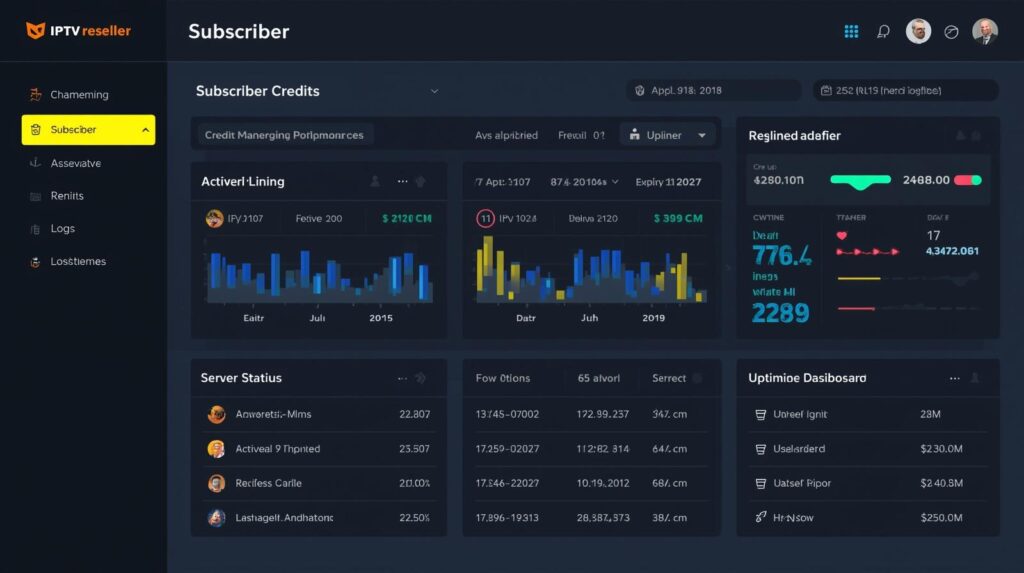
IPTV reseller credit panel dashboard showing subscriber management and uptime stats
How IPTV Reselling Works, and Why It’s Worth Considering
The reseller model is straightforward. You buy panel credits wholesale, create subscription lines for your customers, and earn the margin between your cost and your selling price. The lower your cost per credit and the more subscribers you manage, the more profitable it becomes.
What makes it attractive is low overhead. You’re not running servers, managing encoding, or dealing with content delivery infrastructure. The platform handles that. Your job is customer acquisition, support, and retention.
The Real Costs and Profit Breakdown
Let me give you a realistic picture using a basic formula:
Monthly Profit = (Credits Sold × Retail Price) − (Credits Purchased × Wholesale Cost) − Operating Costs
A practical example: if you purchase 50 credits at £3 each (£150 total), sell each subscription at £8 per month, and have £20 in operating costs (hosting a simple site, payment processing):
Profit = (50 × £8) − (50 × £3) − £20 = £400 − £150 − £20 = £230
That’s a 57.5% margin on a small operation running 50 active subscribers. Scale that to 200 subscribers and the numbers become genuinely interesting. Most established UK resellers I know are running between 150-500 active lines at any given time.
Refund rates matter too. A reliable Iptv panel with stable streams should generate refund requests from no more than 3-5% of your subscriber base monthly. If you’re seeing 15%+ refunds, your provider is the problem, not your customers.
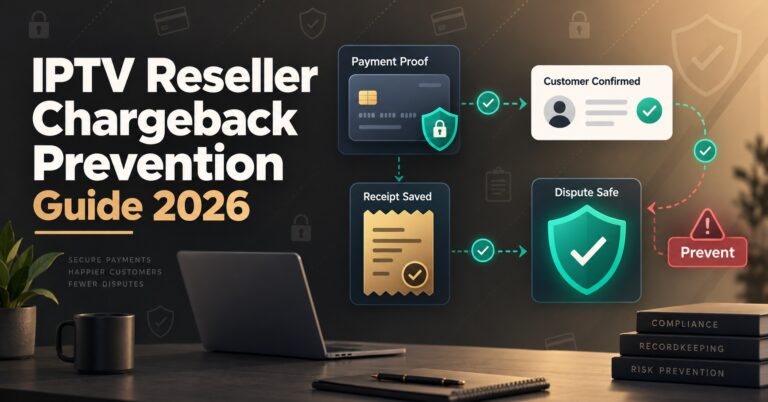
Pro Tip: Track your refund rate from day one. It’s the clearest indicator of provider quality and will tell you whether to stay or switch before losses accumulate.
Common Mistakes to Avoid as a New Reseller
Buying credits in bulk before testing properly. I’ve seen resellers drop £500 on credits with a new provider and discover the streams were unusable within a week. Always run 20-30 clients through a panel for two to three weeks before scaling.
Ignoring the 3pm blackout issue. UK football broadcasting has specific blackout rules. If your clients expect every match at every time slot, manage those expectations clearly or you’ll face constant complaints that have nothing to do with your service quality.
Underpricing to compete. Selling subscriptions too cheaply means you can’t afford to absorb refunds or switch providers when things go wrong. Price for margin, not just volume.
No backup provider. The resellers I know who’ve been operating successfully for three-plus years all maintain a secondary panel. When your primary server goes down during a major fixture, you need somewhere to move clients immediately.
Pro Tip: britishseller.co.uk has been one of the more consistent options I’ve come across for UK-focused IPTV reseller panels, stable infrastructure, decent credit pricing, and they don’t vanish when you need support. Worth checking if you’re evaluating platforms.
IPTV Reseller Success Checklist
Test before you invest. Always trial a panel during peak weekend hours before committing to bulk credit purchases.
Know your margins. Calculate your cost per credit, target retail price, and break-even subscriber count before launching.
Keep a backup panel ready. Never run a single-provider operation if you want to keep clients long-term.
Track refund rates weekly. Anything above 5% monthly signals a provider problem that needs addressing immediately.
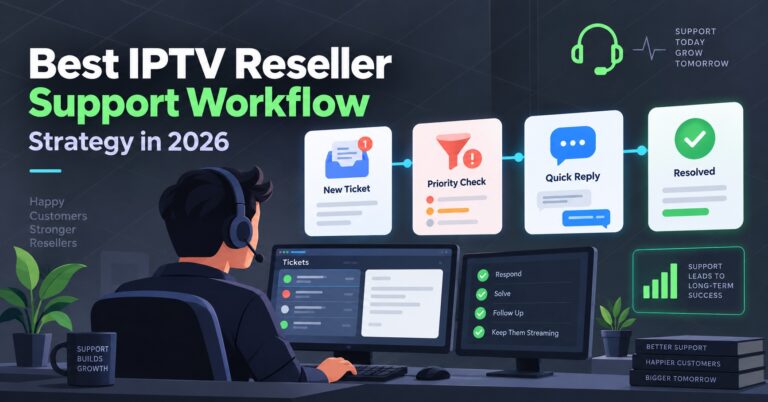
Build your support process early. Fast response to stream issues is your main differentiator as a reseller, since the technical work is already handled by your panel provider.
The IPTV subscription market in the UK isn’t slowing down. Demand keeps growing, device compatibility keeps improving, and the reseller opportunity remains real for anyone willing to operate professionally. The difference between resellers who last and those who don’t usually comes down to one thing: choosing the right panel from the start and treating it like a proper business.