I still remember the first time I tried to become an IPTV provider. It was a Saturday afternoon, a big Premier League fixture was kicking off at 12:30pm, and my test line went completely dark. Not buffering. Not pixelating. Just gone. I had four potential clients waiting on trial links, and I was sat there refreshing my panel like it owed me money.
That afternoon cost me nothing financially, but it taught me everything about what separates serious IPTV providers from the ones who disappear after three months. If you’re researching how to become an UK IPTV Reseller Panel provider in the UK, you’ve landed in the right place. This isn’t a fluffy beginner’s guide, it’s what I wish someone had handed me when I started.
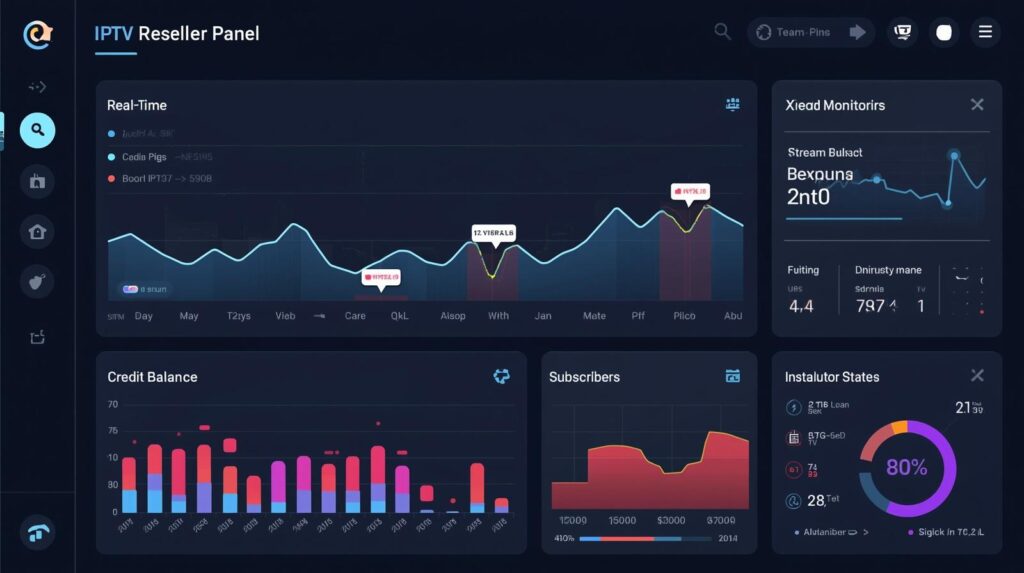
What Does It Actually Mean to Be an IPTV Provider?
Let’s get something clear upfront. When most people say they want to “become an IPTV provider,” they almost always mean becoming an IPTV reseller, and that distinction matters.
A true provider owns and operates the server infrastructure, the CDN, the encoding pipeline, and the content delivery system. That requires serious capital, technical staff, and ongoing server management. You’re looking at tens of thousands of pounds before you’ve sold a single subscription.
A reseller, on the other hand, purchases wholesale credits from an upstream provider and sells activated IPTV lines to end users under their own brand. The infrastructure is handled upstream, so you handle sales, customer support, and growth.
For anyone starting out in the UK market in 2026, reselling is the correct entry point. It’s low overhead, scalable, and you can be operational within 48 hours if you’ve chosen your supplier wisely.
Pro Tip: Never refer to yourself as a “provider” in your marketing copy unless you genuinely own the infrastructure. Sophisticated buyers will ask questions you can’t answer, and it erodes trust fast.
Choosing the Right IPTV Provider (This Is Where Most People Fail)
I’ve seen resellers lose hundreds, sometimes thousands, of pounds because they signed up with the wrong upstream supplier. The damage isn’t always immediate. Sometimes it shows up three weeks in, during a Champions League night, when your entire customer base starts firing off WhatsApp messages at the same time.
When evaluating an IPTV supplier for the UK market, your checklist should include the following.
Uptime guarantee and server redundancy. Any reputable supplier will offer 99.5% uptime or better. Ask specifically about what happens during high-demand windows, Saturday afternoons and midweek European fixtures are the stress tests that reveal weak infrastructure.
UK-optimised servers. General European CDN coverage is not the same as UK-dedicated routing. If your supplier can’t confirm UK-based server nodes, your customers in Manchester, Birmingham, and London will feel the difference in picture quality and latency.
Anti-freeze and failover technology. This is non-negotiable in 2026. Any panel without anti-freeze built in is behind the curve. Failover means that if a primary stream drops, your subscriber’s box automatically switches to a backup stream within milliseconds, and they notice nothing.
Trial access before committing. A legitimate supplier will give you a test line. Run it during peak hours. Don’t judge it on a Tuesday afternoon at 2pm when server load is minimal.
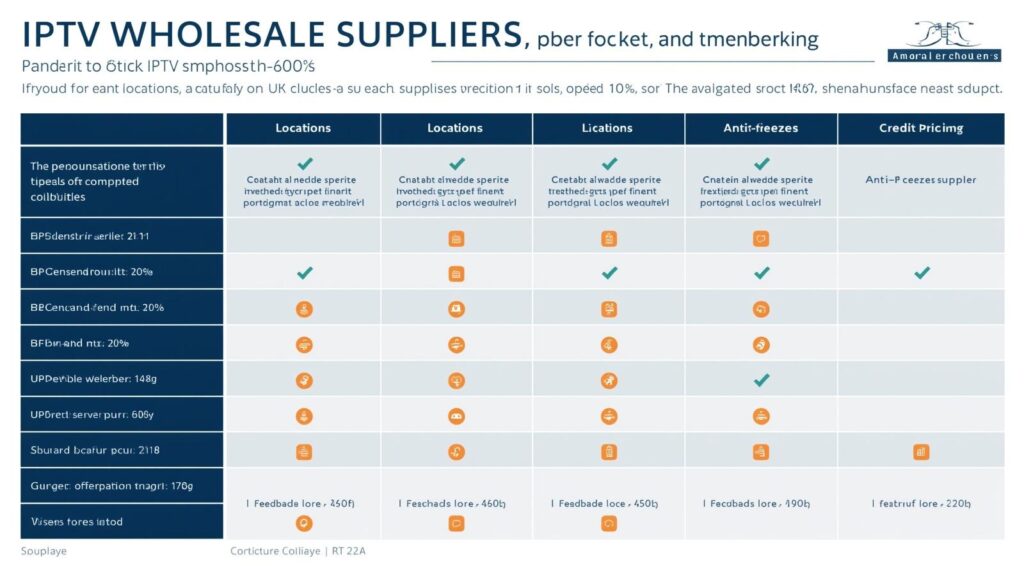
Setting Up Your Reseller Panel
Once you’ve selected a supplier, you’ll be given access to a IPTV reseller panel, typically built on Xtream Codes UI or a proprietary equivalent. This is your operational hub. From here you can create and manage subscriber lines, set expiry dates and connection limits, monitor active streams in real time, and allocate credits to new subscriptions.
Most panels allow you to white-label your offering, meaning your customers see your brand, not your supplier’s. This is important for building customer loyalty and protecting your client list.
Pro Tip: Always set connection limits per line. Allowing unlimited connections on a single subscription is one of the fastest ways to haemorrhage credits and get flagged by your upstream supplier. One or two connections per household is standard.
Understanding Credits, Connections, and Margins
The UK IPTV reseller model runs on a credit system. You purchase credits wholesale from your supplier, and each active subscriber line consumes a set number of credits per month (or per year, depending on your panel’s billing structure).
Your profitability depends entirely on the spread between your wholesale credit cost and your retail subscription price.
Monthly profit comes down to active subscribers multiplied by retail price, minus credits used multiplied by wholesale cost, minus panel fees.
As a real-world example: if you’re retailing subscriptions at £10/month, buying credits at £2 each, and running 50 active subscribers, your gross margin before overheads is £400/month. Scale that to 200 subscribers and you’re looking at £1,600/month gross, which is manageable from a laptop, nights and weekends.
Margins in this industry typically run between 60 to 75% for established resellers who’ve negotiated credit pricing. New resellers usually start at 50 to 60% until volume qualifies them for better rates.
Technical Foundations: Anti-Freeze, EPG, and Device Compatibility
Your customers will use a range of devices. In the UK market, the most common in 2026 are:
Amazon Firestick (dominant in the UK, paired with apps like TiviMate or IPTV Smarters Pro)
Android TV boxes (MAG-style setup using STBEmu or similar)
Smart TVs with built-in app support
MAG boxes (older customer base, still significant)
Your panel should support both M3U playlist delivery and Xtream Codes API, these are the two main methods apps use to pull stream data. If a supplier only supports one, you’ll lose customers who rely on the other.
EPG (Electronic Programme Guide) is the TV guide overlay your customers see inside their player apps. A good EPG makes the service feel professional and complete. A broken or missing EPG is one of the top reasons subscribers cancel in the first two weeks.
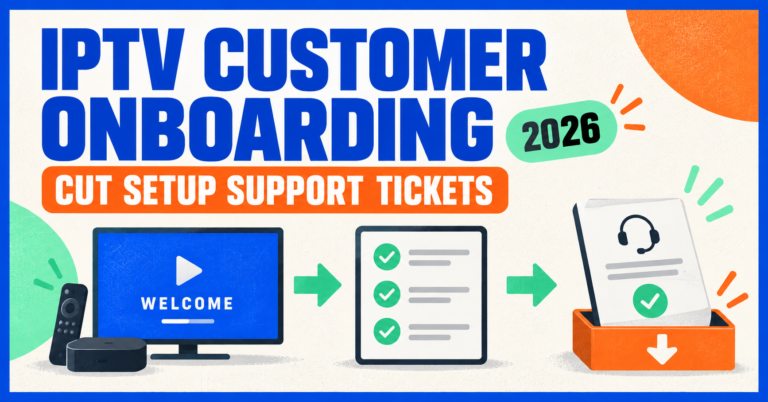
Pro Tip: Send new subscribers a setup guide for their specific device during onboarding. Even a simple PDF reduces support messages by 40 to 50% in my experience. Less time on support means more time on growth.
Building Your Customer Base in the UK
The UK market is fiercely competitive in 2026, but it rewards resellers who focus on reliability over price. Most customers who’ve been burnt by a cheap, unstable service are actively willing to pay more for something that works consistently.
Your primary acquisition channels in the UK:
Telegram groups remain the most effective organic channel for IPTV resellers. Build a community around your brand, offer value through troubleshooting tips and updates, and let word-of-mouth do the work.
Facebook Marketplace and community groups, used carefully and within the rules of each group, still drive a steady stream of new enquiries.
SEO-driven content is the long game, but it compounds. A well-optimized website with genuine how-to content and local UK focus will generate consistent inbound leads that cost you nothing per acquisition once ranked.
Customer retention in this space is primarily driven by uptime. If your streams work during Premier League fixtures and midweek European matches, your customers stay. It’s that simple.
Mistakes That Will Kill Your Business Early
I’ve watched resellers make the same avoidable errors repeatedly. The big ones:
Buying credits from unvetted suppliers on Telegram. If you found a supplier in a random Telegram group and they’re offering credits at half the market rate, run. This is the number one source of reseller horror stories, money transferred, credits never received, supplier disappears.
Overselling your panel capacity. If your upstream supplier has load limits per reseller account and you exceed them, everyone’s streams degrade simultaneously. Know your limits before you sell past them.
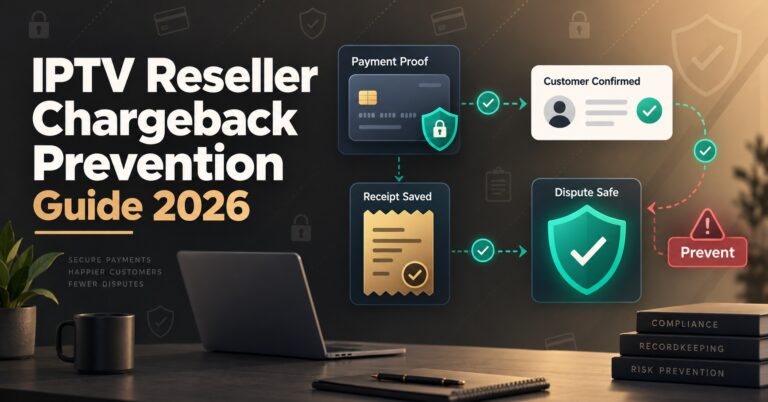
No refund or dispute policy. Customers will ask for refunds. Having a clear, written policy upfront protects you legally and sets expectations. Vague promises lead to PayPal disputes and chargebacks.
Ignoring the 3pm Saturday blackout. Certain live sporting events in the UK have broadcast restrictions that affect IPTV streams specifically. Know which fixtures are affected and set customer expectations in advance rather than dealing with a surge of complaints.
Why britishseller.co.uk Is Worth Your Attention
When I talk to UK IPTV resellers who are scaling beyond their first 50 subscribers and looking for a stable, UK-focused wholesale solution, britishseller.co.uk consistently comes up as a recommended starting point. The infrastructure is oriented around UK demand patterns, including peak-hour stability, and the panel setup is straightforward enough that you’re operational quickly without needing a technical background.
It’s not the flashiest operation in the space, but in IPTV, boring and reliable is exactly what you want from a supplier. If you’re serious about building something sustainable rather than chasing the cheapest credits available this week, it’s worth a look.
IPTV Reseller Success Checklist (5 Points)
Vet your supplier with a live trial during peak hours, not a quiet Tuesday morning. If it holds up during a Saturday fixture, it’ll hold up for your customers.
Set your credit buffer correctly, always maintain 20 to 30% more credits than your current subscriber base requires. Running dry mid-month is an amateur mistake that costs you renewals.
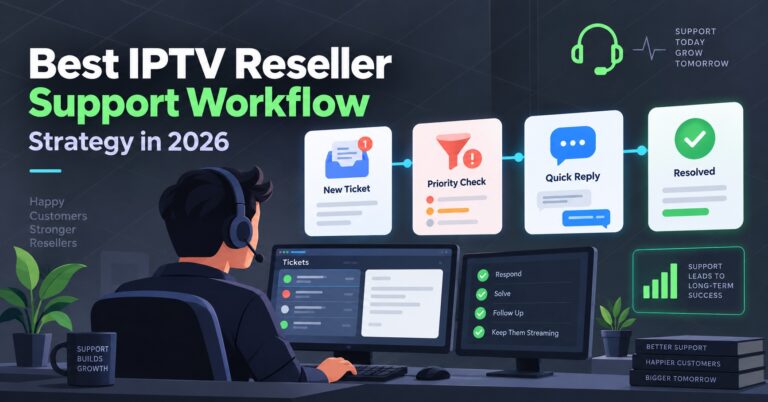
Build a Telegram support channel from day one, it handles most common queries publicly, reducing your one-on-one support load dramatically.
Price for retention, not acquisition, undercutting the market attracts price-sensitive customers who leave the moment someone charges 50p less. Charge a fair rate and compete on reliability.
Track your churn rate monthly, if more than 15 to 20% of your subscribers aren’t renewing, something is broken in your service or onboarding. Fix that before scaling up.