Picture this. Thousands of subscribers tuned in. The biggest football fixture of the month is ten minutes from kickoff. And your panel flatlines. Not a stutter. Not a buffer wheel. A complete, unrecoverable blackout. Your phone starts vibrating like a jackhammer. Fifty messages. A hundred. Two hundred. Refund demands. Angry voice notes. Screenshots of black screens.
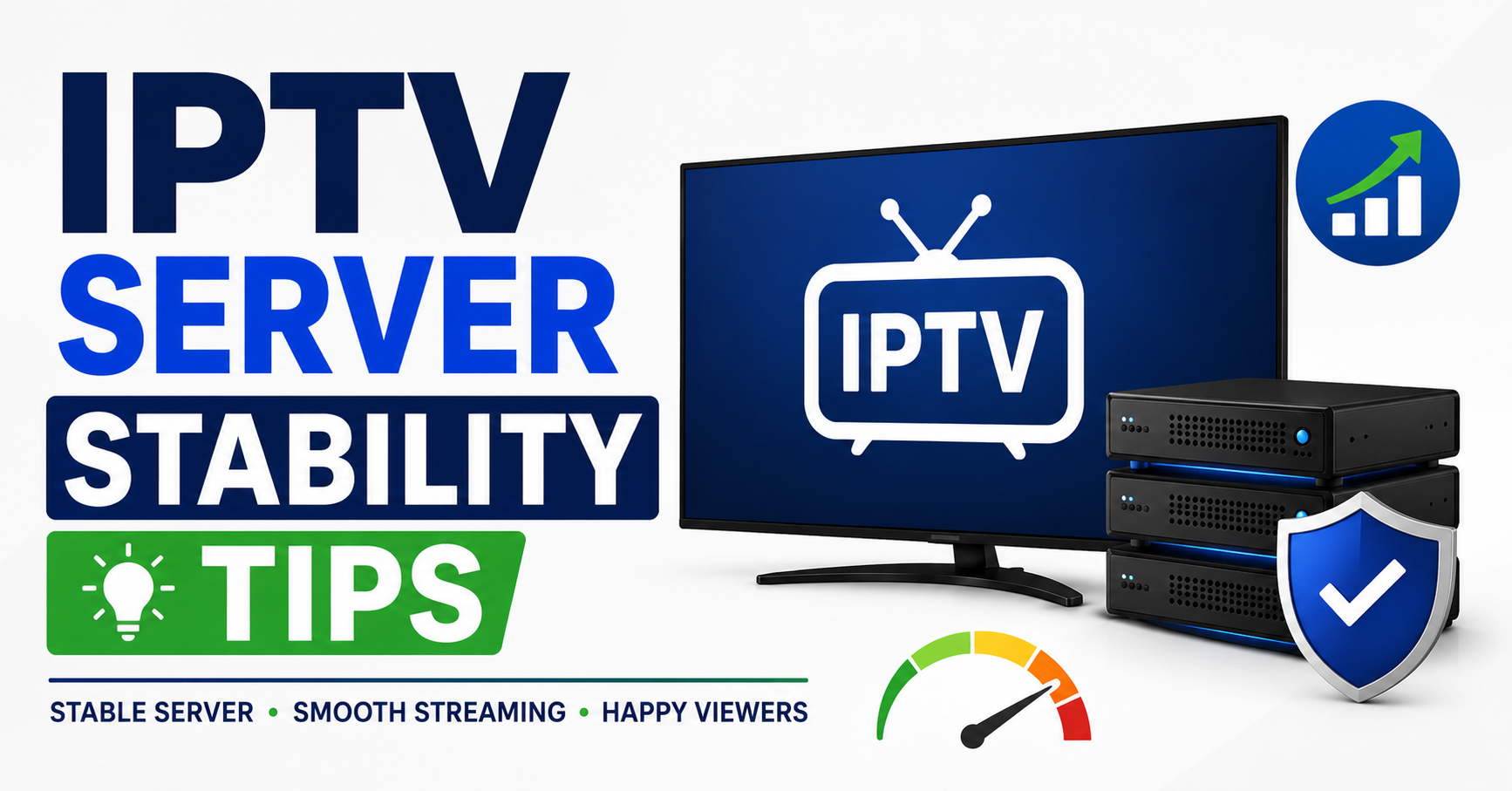
That was my education. Not a course. Not a blog post. A full-scale meltdown on the worst possible night. Every single IPTV server stability tip I’m about to share was forged in that kind of pressure, the kind where your income, your reputation, and your subscriber base are bleeding out in real time.
This article isn’t written from a textbook. It’s written from scars. If you’re running a UK IPTV reseller operation or building one from scratch, what follows could save you from the exact same disaster.
Why Most Resellers Ignore Stability Until It’s Too Late
There’s a dangerous pattern in the reseller space. You launch. Subscribers trickle in. Everything works. You get comfortable. You start believing stability is your provider’s problem. Then the first major sporting event hits, and the infrastructure buckles under load.
Most resellers treat stability as an afterthought because their panels work fine during off-peak hours. Low-traffic windows mask fundamental weaknesses: overloaded origin servers, single points of failure, no failover routing. The buffering only surfaces when 300 people slam into the same stream at 8 PM.
Pro Tip: Test your panel’s response during a mid-tier sporting event before you ever face a finals night. If it stutters with moderate load, it will collapse under peak demand. IPTV server stability tips only matter if you apply them before the crash, not after.
The operators who survive long-term are the ones who stress-test early and build redundancy from day one. Everyone else learns the hard way, or quits.
The 7-10 PM Death Zone: Understanding Peak-Hour Subscriber Load
Every reseller who has been in the game longer than six months knows about the evening death zone. Between 7 PM and 10 PM, particularly on weekdays and match nights, subscriber connections spike dramatically. This is when families sit down, when live sport kicks off, and when every weakness in your infrastructure gets exposed.
What’s actually happening technically during this window is a surge of concurrent HLS stream requests hitting origin servers simultaneously. If your provider hasn’t balanced load across multiple uplinks, packet loss creeps in. Buffering follows. Then the complaints start.
| Factor | Off-peak (2 PM) | Peak (8 PM) |
|---|---|---|
| Concurrent streams | Low | 5x-10x higher |
| Buffer complaints | Rare | Constant |
| Server CPU load | 20-30% | 85-100% |
| Channel switch speed | Instant | 3-8 second delay |
| Subscriber messages | Quiet | Flooding |
Understanding when your system is most vulnerable is one of the most overlooked IPTV server stability tips. You cannot fix what you haven’t measured. Track your complaint patterns by hour and by day of the week. The data tells you exactly where your ceiling is.
Provider-Level Redundancy: The Backup Panel Strategy Nobody Talks About
After my football night disaster, I did something that most resellers still haven’t done in 2026: I set up a secondary panel on a completely different provider. Not a second server on the same network. Not a backup DNS entry pointing to the same infrastructure. A separate provider, separate data center, separate uplink.
Why does this matter? Because when your primary provider’s infrastructure goes down, and it will eventually, having a backup on the same network is like keeping a spare tire in the same car that’s on fire. Provider-level redundancy means your subscribers can be migrated or rerouted to a functioning system within minutes, not hours.
Pro Tip: Keep your backup panel pre-loaded with your channel list and basic subscriber credentials. When your main panel crashes during a live event, you don’t have time to configure from scratch. IPTV server stability tips like this one are the difference between a 10-minute outage and a 3-hour catastrophe.
Most resellers resist this because it means paying for two panels. But consider the cost of losing 40% of your subscriber base in a single night. The math isn’t close.
DNS Poisoning and ISP-Level Blocks: The Invisible Stability Killer in 2026
Here’s something that doesn’t get enough attention in IPTV server stability tips discussions: your server can be perfectly healthy and your subscribers still can’t connect. In 2026, AI-driven ISP enforcement has become significantly more aggressive. Major ISPs in the UK and across Europe are using deep packet inspection and DNS poisoning to identify and block IPTV traffic patterns.
What this looks like on the subscriber end is simple. The app loads, the EPG populates, but channels won’t play, or they buffer endlessly. The subscriber blames you. You blame your provider. But the problem is sitting at the ISP level, silently intercepting requests.
- Use encrypted DNS protocols (DNS over HTTPS or DNS over TLS) on subscriber devices where possible
- Recommend VPN usage to subscribers in regions with aggressive ISP enforcement
- Monitor which ISPs your subscribers are on and track blocking patterns by provider
- Rotate server hostnames periodically to stay ahead of DNS-level blocklists
This isn’t paranoia. It’s operational reality. If you’re not factoring ISP interference into your IPTV server stability tips, you’re diagnosing the wrong problem half the time.
HLS Latency and Why Subscribers Blame You for Buffering
Buffering is the number one complaint every reseller fields during peak hours. But here’s something most operators don’t realize: not all buffering is caused by your panel or your provider. A significant chunk of what subscribers experience as “buffering” is actually HLS segment latency compounding across an overloaded delivery chain.
HLS (HTTP Live Streaming) breaks content into small segments, typically 2-10 seconds long. When the origin server is under load, segment delivery slows. The player runs out of buffered segments and stalls. The subscriber sees a spinning wheel and sends you a message.
Understanding this chain is one of the more technical IPTV server stability tips, but it’s essential. You can’t fix buffering if you don’t understand where in the pipeline the delay originates.
Pro Tip: Ask your provider what segment duration they use and whether they offer adaptive bitrate switching. Shorter segments reduce stall time but increase server requests. Longer segments buffer more smoothly but create larger gaps when things go wrong. There’s no universal answer, it depends on your subscriber base’s average connection quality.
The operators who understand HLS architecture troubleshoot faster and communicate more effectively with their providers. That alone reduces subscriber churn.
Load Balancing: The Infrastructure Layer Most Cheap Panels Skip
When you’re comparing IPTV provider, one of the most revealing IPTV server stability tips is this: ask about load balancing. Specifically, ask how they distribute subscriber connections across servers. If the answer is vague or they don’t mention it at all, you’re looking at a provider who runs everything through a single-origin setup.
Proper load balancing distributes incoming stream requests across multiple backend servers. When one server hits capacity, connections are routed to the next available node. Without this, a single server handles everything, and when it maxes out, everyone buffers.
| Infrastructure | Cheap panel setup | Premium stable setup |
|---|---|---|
| Load balancing | None, single origin | Multi-node distribution |
| Failover routing | Manual or absent | Automatic |
| Uplink servers | 1 | 3-5 minimum |
| ISP block response | None | Hostname rotation |
| Peak-hour handling | Degrades fast | Scales with demand |
| Panel credits system | Basic | Tiered with alerts |
This comparison matters because price alone doesn’t tell you anything about stability. A cheap panel at half the price can cost you triple in lost subscribers when it collapses under load. IPTV server stability tips always come back to infrastructure investment. What you save on panels, you pay in churn.
Subscriber Churn Psychology: Why Stability Failures Cost More Than You Think
Let me walk you through the real economics of instability. When your panel crashes on a busy night, the immediate cost isn’t the downtime itself, it’s the trust damage. Subscribers don’t evaluate your service based on 30 days of performance. They evaluate it based on the one night it failed them during a match they cared about.
One bad evening can trigger a churn cascade. The subscriber who leaves tells two friends not to sign up. The refund request demoralizes your support workflow. The negative review on a forum or Telegram group lingers for months. This is why IPTV server stability tips aren’t just technical advice, they’re business survival strategy.
- A single peak-hour crash can cause 15-40% subscriber churn within 48 hours
- Subscribers who experience buffering on two separate occasions rarely renew
- Offering a partial credit after downtime retains more users than ignoring the issue
- Transparent communication during outages (“We’re aware, working on it, ETA 15 minutes”) dramatically reduces rage-cancellations
Pro Tip: Set up a broadcast channel on Telegram or WhatsApp specifically for outage updates. When things break, subscribers who can see you’re working on it are far more patient than those sitting in silence watching a black screen. This is one of the most underrated IPTV server stability tips for retention.
Scaling Without Breaking: Adding Subscribers Without Killing Stability
Growth is every reseller’s goal. But uncontrolled growth without infrastructure planning is the fastest path to instability. I’ve watched resellers go from 200 happy subscribers to 800 miserable ones because they never upgraded their panel capacity to match the load.
Scaling responsibly requires a staggered approach. Add subscribers in batches. Monitor peak-hour performance after each batch. If buffering complaints increase by even 10%, pause growth and address the bottleneck before adding more connections.
Here’s a framework that works:
- At 0-200 subscribers: single-panel setup is manageable, monitor peak-hour behavior weekly
- At 200-500 subscribers: begin load testing, establish a backup panel on a separate provider
- At 500-1,000 subscribers: load balancing becomes mandatory, not optional
- At 1,000+: multiple uplink servers, automated failover, and a dedicated support channel are non-negotiable
IPTV server stability tips for scaling always come back to one principle: your infrastructure must grow ahead of your subscriber count, not behind it. If you’re adding users to a system that’s already at 80% capacity during peak hours, you’re building on a foundation that will crack.
Backup Uplink Servers: Your Insurance Against Total Blackout
Uplink servers are the backbone of your stream delivery. When a primary uplink goes down, whether from a hardware failure, a DDoS attack, or ISP-level intervention, every subscriber on that uplink loses their connection simultaneously. This is how a localized server issue becomes a total service blackout.
Running backup uplink servers is one of the most critical IPTV server stability tips for any UK IPTV reseller operating at scale. Your provider should have a minimum of three geographically distributed uplinks. If they don’t, you need to ask why, or switch.
The geography matters because regional ISP blocks or network outages won’t affect uplinks in other locations. A server in Frankfurt going down shouldn’t kill subscribers routed through Amsterdam or London. This is basic resilience engineering, but a shocking number of IPTV providers in 2026 still operate on single-uplink architectures.
Pro Tip: Ask your provider for an uplink status page or monitoring dashboard. If they can’t show you real-time uplink health, they probably aren’t monitoring it themselves. IPTV server stability tips are useless if your provider doesn’t have the infrastructure to implement them.
Panel Credit Management and How It Quietly Affects Stability
Here’s a dimension of IPTV server stability tips that nobody writes about: panel credit management. When your credits run low or expire unexpectedly, your subscriber connections can be throttled or cut off entirely by the provider. This looks like a stability issue to your subscribers, but it’s actually an administrative failure on your end.
Set up alerts for credit thresholds. Most panel systems allow you to configure notifications when credits drop below a certain level. If yours doesn’t, set a manual calendar reminder to check weekly. Running out of credits on a Friday evening before a packed weekend of live sport is an entirely avoidable disaster.
- Track credit depletion rate against subscriber growth
- Maintain a minimum 30-day credit buffer at all times
- Negotiate bulk credit pricing with your provider for cost efficiency
- Never assume auto-renewal is functioning, verify manually each cycle
This is the kind of operational hygiene that separates sustainable businesses from resellers who are constantly firefighting. IPTV server stability tips extend beyond servers and code, they include the business systems that keep your panel active.
Frequently Asked Questions
How often should I test my IPTV panel’s stability under load?
Test at least once per month during a moderately busy evening, ideally during a mid-level sporting fixture. Simulating real peak conditions reveals weaknesses that off-peak testing misses entirely. If you’re scaling past 500 subscribers, increase to fortnightly testing with a focus on concurrent stream handling and channel-switch response times.
What does DNS poisoning look like from a subscriber’s perspective?
The app opens normally, the EPG loads, and everything appears functional, but individual channels refuse to play or buffer indefinitely. Subscribers typically assume it’s your panel, but the issue sits at the ISP level where DNS requests are being intercepted or redirected. Recommending encrypted DNS or a VPN to affected subscribers usually resolves it immediately.
Can IPTV server stability tips help reduce subscriber churn?
Absolutely. Stability is the single biggest factor in subscriber retention. A panel that performs reliably during peak hours and live events generates fewer complaints, fewer refund requests, and significantly higher renewal rates. Most churn in IPTV reselling is directly caused by repeated buffering or outage incidents.
Is a backup panel on the same provider as effective as one on a different provider?
No. A backup panel on the same provider shares the same infrastructure, same uplinks, and same failure points. If the provider experiences a network-wide issue, both your primary and backup go down together. Provider-level redundancy, using a completely separate company and data center, is the only meaningful failover strategy.
How many uplink servers should a reliable IPTV provider have?
A minimum of three geographically distributed uplinks is the baseline for any provider you’d trust at scale. Single-uplink setups are extremely fragile and vulnerable to regional outages, DDoS attacks, and ISP-level blocking. Ask your provider directly about their uplink architecture before committing.
What’s the ideal panel credit buffer for a reseller?
Maintain at least a 30-day buffer of credits beyond your current subscriber load. Credit exhaustion during peak periods can throttle or disconnect active subscribers without warning. Set up alerts, track depletion rates weekly, and never rely solely on auto-renewal, verify it manually each billing cycle.
Why does buffering only happen during evening hours?
Evening hours between 7 PM and 10 PM see the highest concentration of concurrent streams as families and sports viewers tune in simultaneously. Servers that handle daytime traffic easily become overwhelmed when connection requests multiply five to ten times. This is why load balancing and multi-server architecture are essential for any serious operation.
Should I tell subscribers to use a VPN for stability?
In regions with aggressive ISP enforcement, recommending a reputable VPN can resolve DNS-level blocking and deep packet inspection issues that cause unexplained buffering. It won’t fix genuine server-side problems, but it eliminates ISP interference as a variable, which in 2026 accounts for a growing percentage of subscriber complaints.
IPTV Server Stability Tips: Reseller Success Checklist
Set up a secondary panel on a completely different provider before you need it, not during a crisis
Monitor peak-hour performance between 7-10 PM at least weekly and log complaint patterns
Maintain a minimum 30-day panel credit buffer and verify renewal status manually
Ask your provider about load balancing architecture, uplink count, and failover routing before committing
Educate subscribers in ISP-heavy regions about encrypted DNS and VPN usage
Create a Telegram or WhatsApp broadcast channel dedicated to outage communication
Stress-test your infrastructure during mid-tier events before peak fixtures expose weaknesses
Scale subscriber intake in batches, pause growth if buffering complaints rise even slightly
Track churn by incident, not by month, understand which specific failures cost you renewals
Treat every stability failure as a systems audit opportunity, not just a one-off problem to patch
For a deeper look at IPTV reseller panel setup, provider selection, and reseller infrastructure guides, visit BritishReseller.com, built by operators who’ve been through the crashes and come out the other side.