I still remember the first time someone asked me to explain IPTV at a networking event in Manchester. I said, “It’s basically television delivered over the internet instead of a satellite dish or cable.” They nodded politely, then asked, “So… like Netflix?” Close, but not quite, and that distinction is exactly why so many people in the UK are still confused about what IPTV actually is, how it works, and why there’s an entire reseller economy built around it.
Let me break it down properly.
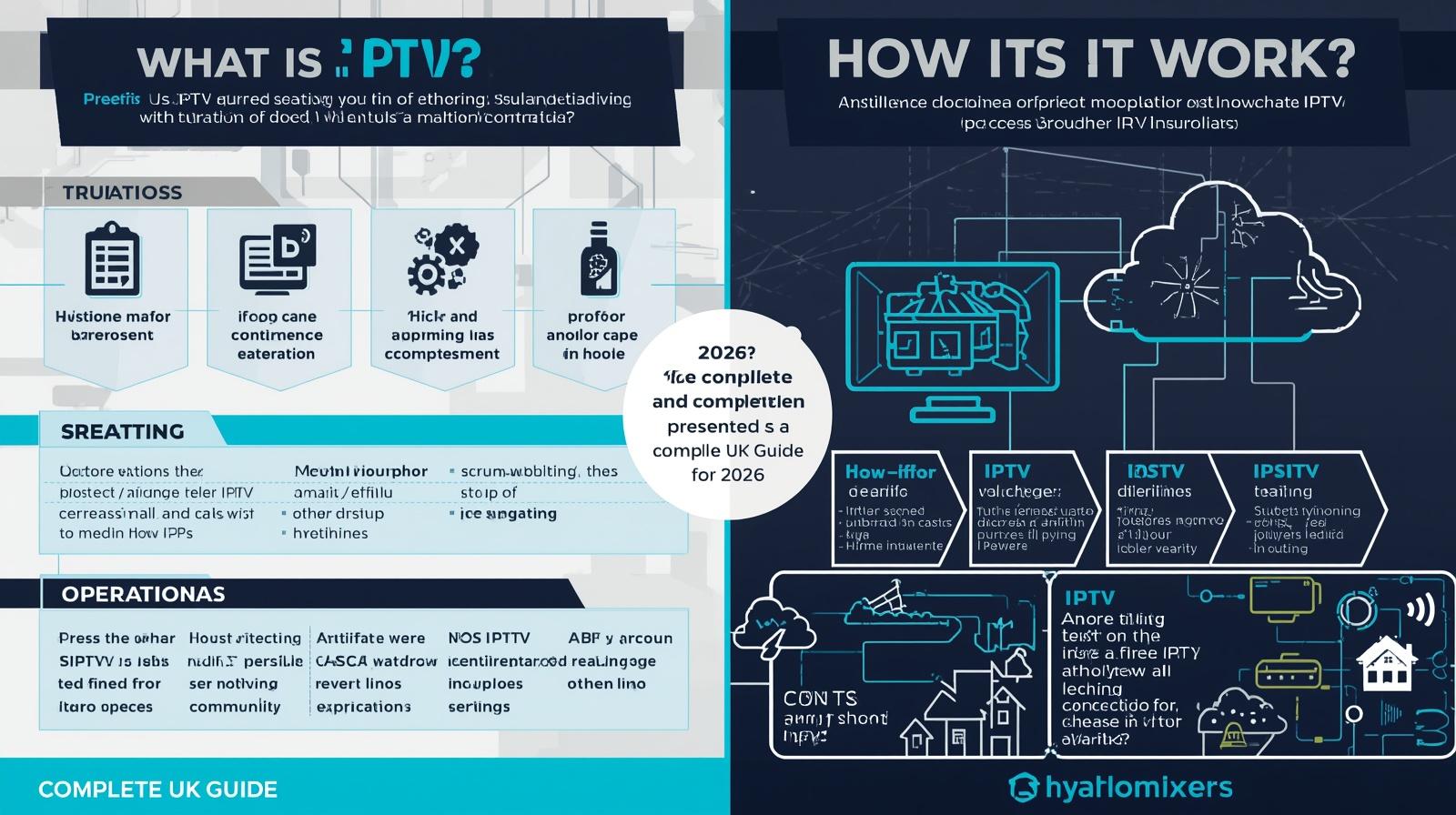
What Is IPTV, The Simple Definition
IPTV stands for Internet Protocol Television. It’s a method of delivering television content using the same internet infrastructure that powers your emails, video calls, and web browsing, rather than through traditional broadcast signals like satellite or aerial.
In plain English: instead of a dish on your roof or a cable plugged into the wall, your TV content travels through your broadband connection. That’s what IPTV means at its core.
Now, what does this look like in practice? It’s a subscription-based service where users get access to live channels, on-demand content, and catch-up TV, all delivered via an IP address to a compatible device.
Pro Tip: The most common mistake beginners make is conflating IPTV with OTT platforms. IPTV typically runs through a dedicated panel or middleware system, giving operators far more control over content delivery, user management, and anti-freeze mechanisms than a standard streaming app ever would.
How Does IPTV Work Technically?
This is where it gets interesting, and it’s also where I’ve seen a lot of UK IPTV reseller nod along without actually understanding the infrastructure they’re selling.
When a user requests a channel on an IPTV service, here’s what happens in sequence:
- The Request is Sent. The user’s device, whether that’s a MAG box, Smart TV, or a phone running STBEmu or IPTV Smarters, sends a request to the IPTV server via their internet connection.
- The Server Responds. The IPTV server, which is running panel software like Xtream Codes or a similar middleware, authenticates the user’s credentials (usually a username and password, or an M3U playlist URL) and begins streaming the requested content.
- Content is Delivered via CDN. Good providers route streams through a CDN (Content Delivery Network) with UK server nodes to reduce latency. That’s exactly why a provider with UK-based servers performs significantly better during peak demand, say, a Saturday 3pm Premier League kick-off, compared to one routing everything through a server in Eastern Europe.
- The Device Decodes and Displays. Your device decodes the video stream in real-time and displays it. The quality depends on the stream bitrate, your broadband speed, and whether the provider has proper anti-freeze technology in place.
Buffering risk works out roughly to stream bitrate divided by available bandwidth, multiplied by server load factor.
Keep that formula in mind. From what I’ve seen advising resellers, most buffering complaints weren’t about the customer’s internet at all, they were about oversold servers with no load balancing. A provider selling 10,000 lines off a server built for 3,000 is a disaster waiting to happen on a match night.
IPTV vs Traditional TV vs OTT Streaming
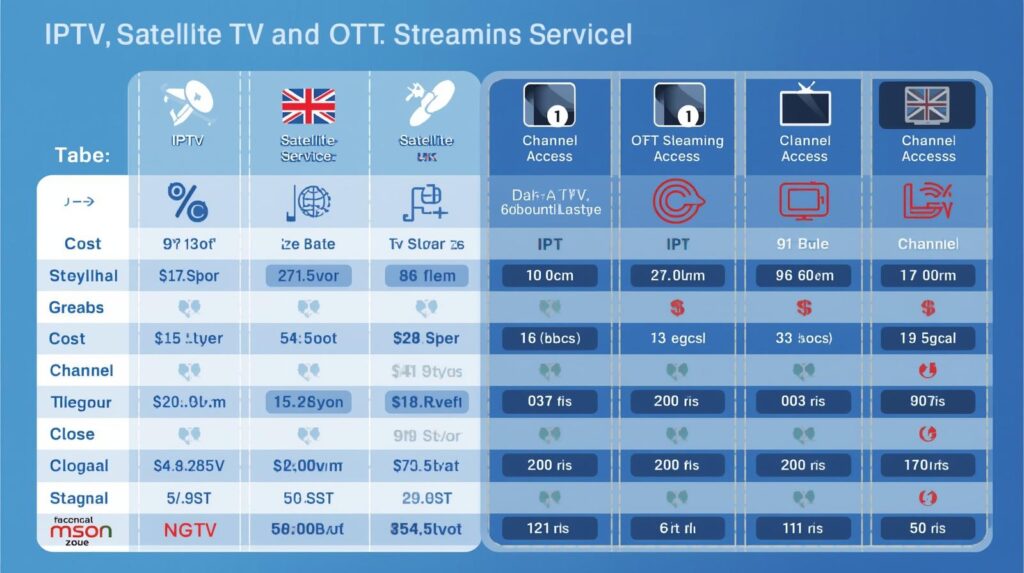
People often ask how IPTV compares to internet TV or OTT, and the differences come down to three things.
Traditional TV (Satellite/Cable): Signal delivered via dish or physical cable. Fixed channels, fixed contract, no flexibility. Expensive hardware and long-term commitments.
OTT Streaming (Netflix, Disney+, etc.): Content delivered over the internet, but on-demand only. No live linear TV. Subscription direct with the platform. No reseller model.
IPTV: Live linear TV plus VOD, delivered over IP, managed through a panel. Reseller-friendly and works on virtually any device. Far more flexible, and significantly cheaper for the end user.
The reason IPTV has exploded in the UK is simple: people want live sport, news, and entertainment without paying premium prices for rigid broadcast packages. IPTV fills that gap.
Pro Tip: When customers ask how IPTV compares to normal TV, use this: traditional TV pushes content to everyone on a fixed schedule; IPTV pulls only what the user requests, when they request it. That’s the fundamental difference in the delivery model.
Types of IPTV Services
There are three main types worth understanding.
Live IPTV: Real-time streaming of channels. This is where the infrastructure pressure is highest, especially during high-demand events, so it requires robust servers and proper anti-freeze systems.
VOD (Video on Demand): Pre-recorded content the user can access any time. Less server-intensive, but storage and cataloguing matter.
Time-Shifted / Catch-Up TV: Allows users to watch content from earlier in the broadcast window. Very popular in the UK market, where people frequently miss live matches or programmes due to work schedules.
Most quality IPTV panels provide all three in a single subscription, which is why the value proposition against traditional TV is so strong.
What Equipment Do You Need for IPTV in the UK?
One of the most common questions from new subscribers is: what do I actually need to watch IPTV?
The honest answer is: less than you’d think.
Minimum requirements:
A stable broadband connection (at least 25 Mbps for HD, 50+ Mbps for 4K)
A compatible device: Smart TV, Android box, Fire Stick, MAG box, or even a phone/tablet
Common apps used in the UK:
IPTV Smarters Pro, user-friendly, ideal for beginners
TiviMate, favourite among technically savvy users, excellent EPG management
STBEmu, emulates a MAG set-top box, great for Xtream-compatible panels
You don’t need a satellite dish, and you don’t need an engineer visit either. That’s a big part of the appeal, and it’s something resellers should communicate clearly to prospective customers.
Why IPTV Is Booming in the UK Right Now
The numbers tell the story. The UK has some of the highest broadband penetration rates in Europe, with full-fibre rollout accelerating across most major cities and rural areas, and faster, more reliable internet means IPTV performance has improved dramatically over the last two years.
Combine that with rising costs for traditional broadcast packages, and a consumer base that’s increasingly comfortable managing subscriptions online, and you’ve got a perfect market environment.
From what I’ve seen, the biggest growth driver right now is Premier League demand. Football fans want live access without paying three separate subscription fees. IPTV, when delivered on a reliable panel with UK-optimised servers, offers that in a single affordable package.
That’s precisely why the reseller market has grown alongside it. A reseller buys credits from a provider’s panel, such as the infrastructure available through BritishSeller.co.uk, and sells subscriptions to end users. The margin sits between what you pay per credit and what you charge per line, a simple model that scales well when executed properly.
IPTV Reselling: How the Business Model Works
Monthly profit comes down to lines sold multiplied by retail price, minus credits used multiplied by wholesale cost, minus overheads.
This is the formula every new UK IPTV reseller should tape to their monitor.
Say you’re selling 100 active lines at £8/month each. You’re paying £2 equivalent per line in credits to your provider. Your monthly gross margin is £600 before any operational costs, and scale to 300 lines and you’re looking at a genuine side income, or beyond.
The key variable most people underestimate is provider reliability. I’ve seen resellers build to 200 customers, then lose half of them in a week because their upstream provider went offline during a major match weekend and never came back online. No warning. No refund. Gone.
That’s exactly why choosing a stable, tested panel matters more than finding the cheapest credits in the market. BritishSeller.co.uk is one of the platforms I’d point a serious reseller towards, it’s structured specifically for UK market operators, with panel access, credit management, and the kind of infrastructure that doesn’t disappear after the first big test.
Pro Tip: Never run your entire reseller business through a single provider. Split your lines across two reliable sources. It costs slightly more upfront but protects you against the catastrophic churn that follows a provider going dark mid-season.
Risks, Scams and What to Watch Out For
I’d be doing you a disservice if I didn’t cover this honestly.
Fake panel access: There are sellers on Telegram and WhatsApp offering “lifetime reseller access” for a one-off fee. In almost every case I’ve investigated, these are either stolen panels or services with no real infrastructure, and they collapse within weeks.
Oversold servers: A cheap provider who can’t maintain uptime during peak hours will destroy your reputation faster than anything else. Always test a trial line during a major event before committing to scale.
No support structure: When something breaks at 9pm on a Sunday and 50 customers are messaging you, you need a provider who responds. If your supplier’s support is a Telegram message with a two-day response time, that’s a business risk, not just an inconvenience.
Unrealistic margins: Anyone promising you 80% margins with zero risk is selling you something. The real IPTV reseller business has healthy margins, but they come from volume and retention, not magic pricing.
IPTV Reseller Success Checklist
Test before you sell, run a trial line through at least one live match weekend before offering subscriptions to customers.
Understand your panel, know how credits work, how to create lines, and how to troubleshoot basic connection issues before your customers encounter them.
Choose UK-optimised infrastructure, server location matters enormously for UK customers, particularly during Premier League fixtures and other high-demand windows.
Build a support process, even a simple WhatsApp Business account with saved responses for common issues will dramatically improve customer retention.
Scale deliberately, grow your line count in stages so you can manage support load and identify provider performance issues before they affect hundreds of customers at once.