Most guides answer that question like a Wikipedia stub. I’m going to answer it the way I’d explain it to a mate sitting across from me at the pub who’s thinking about getting into this business and wants to know what he’d actually be selling.
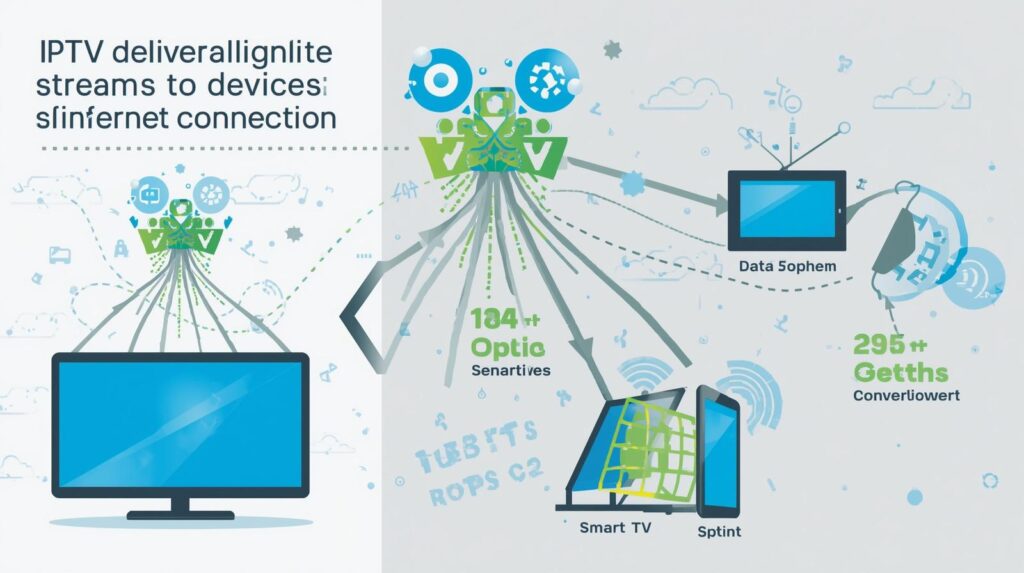
So here’s the short version before the long one: an IPTV service is television delivered as data over your internet connection instead of coming down a satellite dish or a cable line. Your device pulls the stream as a series of data packets, decodes them, and puts a picture on the screen. That’s it. That’s the whole magic trick.
But “what is it” and “what is it really, as a thing you’re going to put your name and money behind” are two completely different questions. The first one I can answer in a sentence. The second one took me three years and a few bruising weekends to properly understand.
The picture the customer sees versus the system you’re running
To the person watching, it feels like normal tally. They open an app, they scroll a list, they tap a channel, it plays. Clean and simple.
Behind that, though, there’s a stack of moving parts, and every one of them can be the thing that fails. There’s the upstream source that actually holds the content. There’s middleware that authenticates the user and decides whether their line is active. There’s a panel where lines get created and managed. And there’s the delivery path, the servers and the routing that get the stream from the source to the sofa without it stuttering.
When all of that works, nobody thinks about it. When one piece wobbles, the customer doesn’t see “a middleware authentication timeout.” They see their match freeze at 2-1 and they ring you, annoyed.
The practical differences that actually matter to a customer:
Broadcast gives you fixed channels on a fixed schedule. What’s on is what’s on. IPTV gives you on demand libraries, catch up, the ability to rewind something that aired hours ago, and it runs across MAG boxes, Firesticks, Android boxes, phones, smart TVs, the lot.
Here’s the thing I wish someone had drilled into me early: customers don’t stay because of channel count. I’ve watched resellers advertise “12,000 channels!!” like it’s a selling point and then bleed subscribers anyway. Nobody has ever watched 12,000 channels. They’ve got about six they care about and one of them is whatever sport is on this weekend. They leave when that one stutters. The channel count is a vanity number.
The bit nobody tells you: you’re not building anything
Here’s where most “what is IPTV” explainers go quiet, because it’s the commercially honest part.
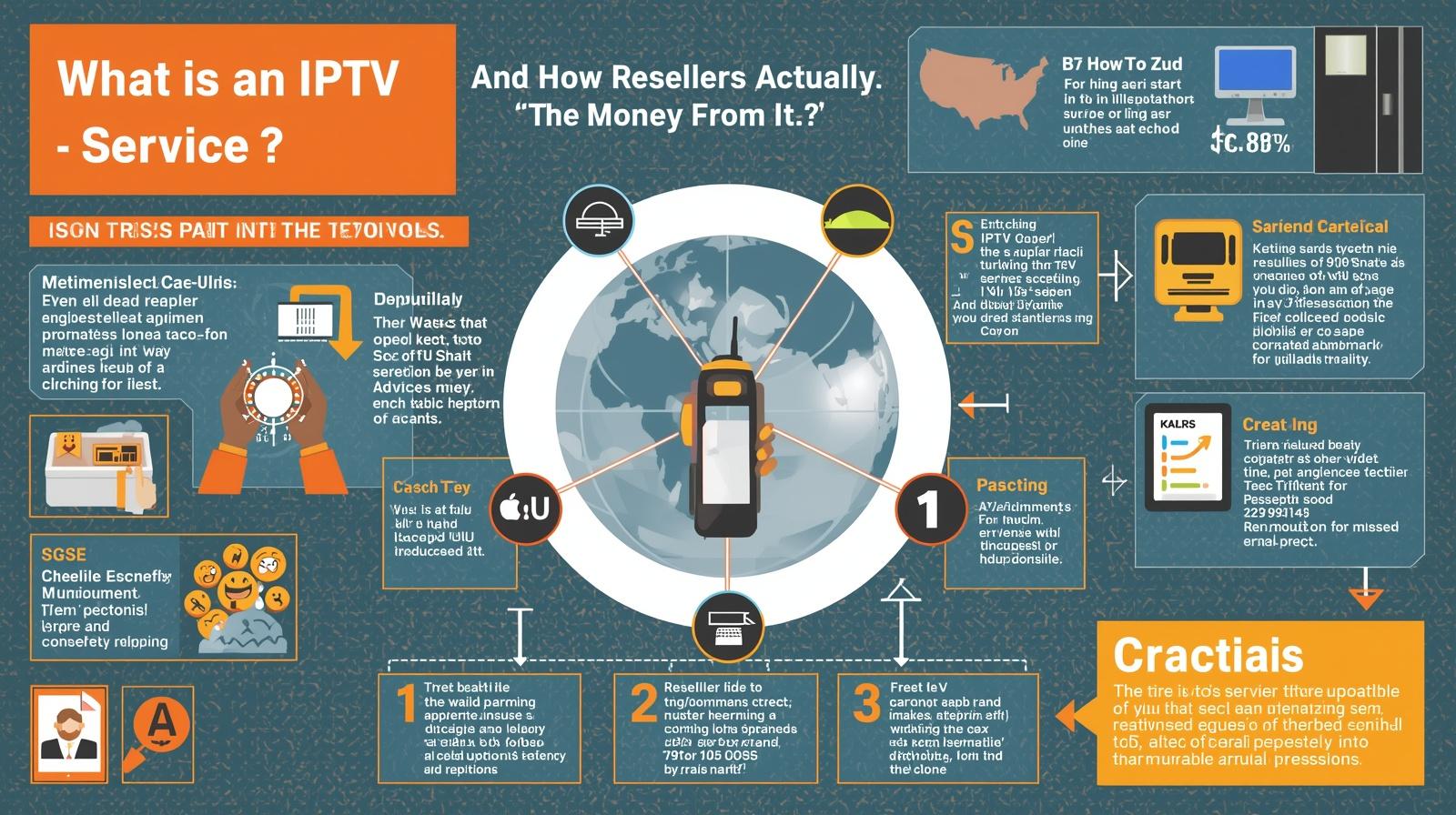
The service you’d be selling as a reseller is almost never something you create. You’re sitting on top of a layer somebody else runs. The chain looks like this:
Upstream source feeds a panel, the panel is what you log into, you create lines for your customers, and your customers watch.
You buy into a reseller account, usually pre loaded with credits, and you use the panel to spin up and manage subscription lines. One line is one active subscription. You set your own prices, you handle your own customers, and your money is the gap between what a line costs you wholesale and what you charge for it.
It’s a real business. I know people in the UK running this with 200 to 400 active lines as their full income, working from a laptop and a phone. It’s not passive and it’s not effortless, but it’s genuine.
How the Credit System Works
Everyone explains credits the same lazy way: one credit equals one month for one line. Which is true, and also useless on its own, because it tells you nothing about how you actually work with them.
The money side is simple arithmetic. Your profit is what you take in from selling lines, minus what the credits cost you to buy, minus the time and refunds you spend keeping people happy.
Say credits cost you £1.50 each and you sell a line at £8 a month. With 100 active lines that’s £650 a month before you account for your own time. Push it to 300 and you’re around £1,950. The number on paper always looks lovely. What quietly chips away at it is refunds, the credits you hand back when something goes down, and the hours you lose fixing somebody’s Firestick over WhatsApp at half ten at night.
What Makes an IPTV Service Good or Terrible
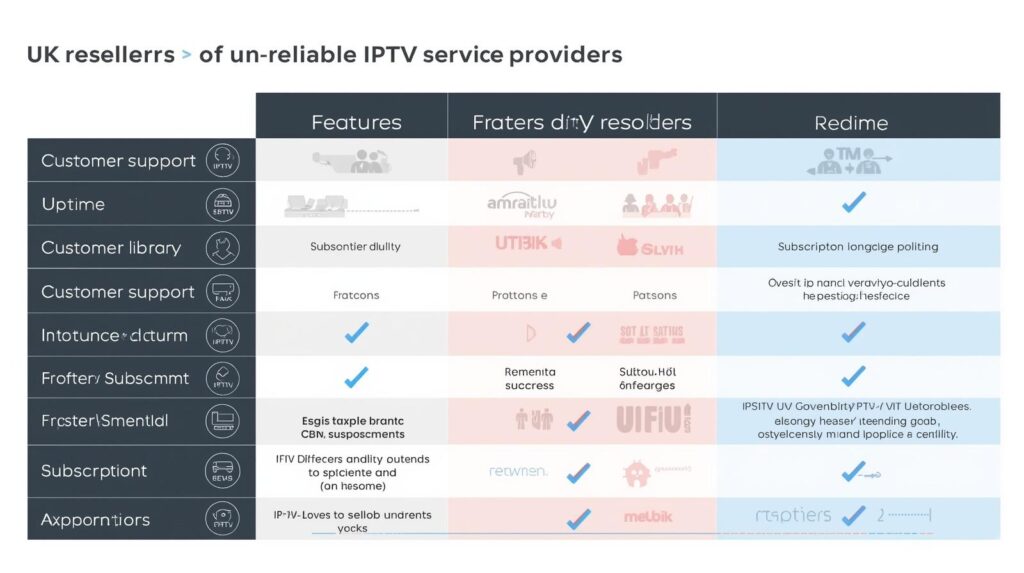
I’ve tested more providers than I care to count. Here’s the honest breakdown of what separates reliable from rubbish:
Uptime consistency: Anything below 99.2% uptime on a UK server during peak hours is unacceptable for a paid service. Good providers will tell you their uptime stats. Bad ones will go quiet.
Anti freeze technology: Quality providers use buffer management and CDN redundancy to prevent the stream from stalling when server load spikes. This is non negotiable for UK IPTV resellers during high demand sporting events.
Panel responsiveness: Your reseller panel is your control center. If it’s slow, buggy, or goes offline during a billing dispute, you’re operating blind.
Support response time: Provider side support that takes 48 hours to respond during a live outage is worse than no support. I’ve switched providers purely on this basis.
The Technical Side You Can’t Ignore
You don’t need to be a network engineer. You do need to understand enough that you’re not making expensive guesses, because a lot of “the provider’s broken” complaints are actually something else entirely, and knowing the difference saves you refunds.
Bandwidth per stream is the first thing. A standard HD stream wants somewhere around 8 to 12 Mbps. A 4K stream pushes 25 to 50. So when a customer’s stream keeps buffering and they’re on a shared connection with three other people hammering it, that’s their broadband, not your provider, and being able to explain that calmly is worth its weight. The simple way to size it: streams running at once, times the average bitrate of each, gives you roughly the capacity needed. Two hundred people watching HD at once is somewhere in the region of 1.6 to 2.4 Gbps of upstream your provider has to be carrying. If they can’t carry it, you’ll feel it before they admit it.
Then there’s how different devices actually connect, and this trips up nearly every new reseller. A MAG box authenticates by its STB MAC address. Apps like IPTV Smarters and TiviMate connect through the Xtream Codes API instead. They’re two different doors into the same house. So when you get a line that plays perfectly in Smarters but throws a portal error on a MAG box, your instinct shouldn’t be to assume the line’s dead. Nine times out of ten it’s a setup mismatch, the wrong portal URL, or the MAC not registered, and you can fix it in two minutes once you’ve seen it a few times.
Operational note: get into the habit of testing every new line on at least two different device types before you tell a customer they’re good to go. A line confirmed only on one device is a refund conversation waiting to happen, because the failure shows up after the money’s changed hands. Catch it before, and the customer never even knows there was a wobble.
UK Market Specifics Every Reseller Must Know
Selling IPTV in the UK has some very specific pressures that don’t apply in other markets.
The 3pm blackout: UK football’s 3pm Saturday blackout means certain live matches aren’t broadcast on mainstream channels. IPTV demand spikes enormously during this window. Your provider needs to handle that. Test it specifically.
Premium sports demand: The UK market is heavily driven by live sport. Clients are often paying specifically to watch matches that they’d otherwise pay significant monthly fees for through legitimate broadcast subscriptions. That demand is consistent and predictable — use it to structure your subscription pricing.
Viewer habits: UK subscribers tend to use Firesticks more than any other device in my experience, followed by Android boxes and smart TVs via apps. Make sure whatever service you’re reselling has solid Firestick/Android compatibility and that your setup guides cover those devices specifically.
Payment expectations: UK clients expect professional feeling transactions. If you’re still collecting payment via bank transfer with no receipt system, you’re losing conversions. Use proper invoicing, even if it’s basic.
If you’re looking for a panel that handles UK traffic reliably vetted providers, clean credit system, and a panel that doesn’t go dark on a Saturday britishseller.co.uk is where I’d point you first. It’s built for the UK reseller market specifically, not retrofitted from a bulk international setup.
Before you sell a single line, run this checklist
Test it properly before you sell. Run any provider across two full weekends including big fixtures before a single paying customer touches it. The quiet weeks lie to you.
Know your numbers cold. Your cost per credit, your retail price, and the subscriber count where you actually break even, all of it before you spend a penny on marketing.
Get genuinely good at two devices. Be properly competent setting up a Firestick and at least one Android app, Smarters or TiviMate. That alone kills off most of your support load.
Decide your refund policy now, not later. Work out exactly where you stand on downtime credits and partial refunds before a customer demands an answer. Deciding it under pressure goes badly every time.
Pick a provider whose support is real. Their response speed becomes your response speed. When they’re slow, your customer feels it through you, and that’s not a minor feature, that’s your reputation sitting in someone else’s hands.