Here is something almost nobody tells you before a big tournament. The service that plays a quiet Tuesday night match without a single hiccup is very often the same service that falls apart the moment a huge game kicks off. The picture freezes right as a striker lines up a shot, and by the time it comes back, three people in the room are already shouting because they saw the goal on their phone first.
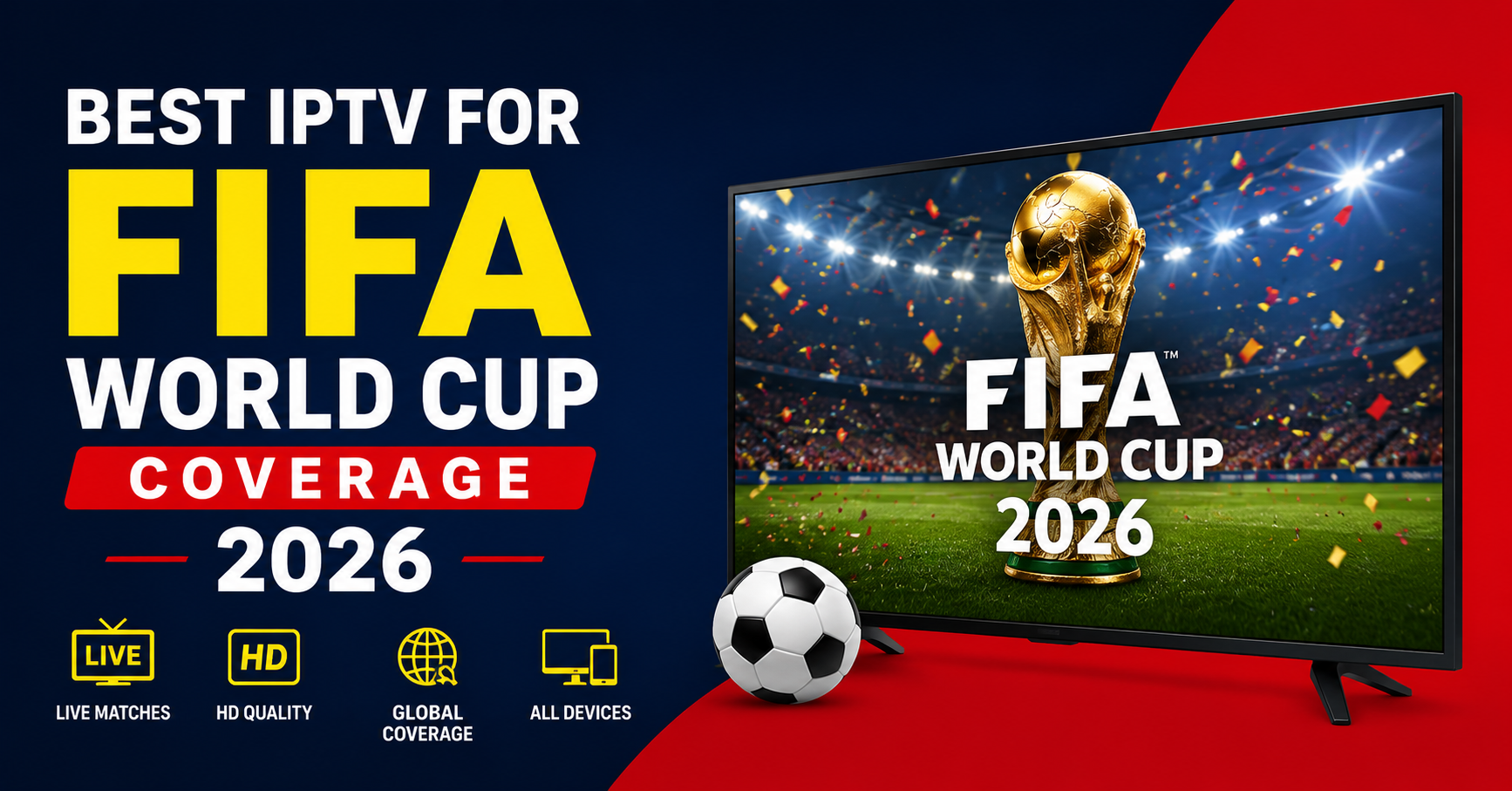
That single moment is what separates a good service from a bad one. So when people ask about the Best IPTV for FIFA World Cup Coverage 2026, they are really asking a different question without knowing it. They are not asking which service has the most channels. They are asking which service stays alive when millions of people hit play at the exact same second.
The Short Answer Before Anything Else
The Best IPTV for FIFA World Cup Coverage 2026 is the one built on strong infrastructure, multiple servers, and proper failover, not the one with the lowest price or the longest channel list. During the 2026 World Cup, which runs from June 11 to July 19 across the United States, Canada and Mexico, you are dealing with 104 matches and 48 teams. That means a lot of nights where huge numbers of people stream the same game at once.
If your stream keeps freezing during big matches, the cause is almost never your TV. It is usually one of three things: an overloaded server on the provider’s side, your own internet connection struggling, or your internet provider quietly slowing down streaming traffic. The fix is to test before the tournament, not during it.
Here is the most important takeaway. Judge a service by how it behaves during a packed match, not during a quiet one. Everything else in this guide explains how to do exactly that.
Why Big Matches Break Streams That Normally Work Fine
Think of a single server like a single road into a stadium. On a normal day, traffic flows fine. But when 80,000 people try to leave at once, that one road jams completely. Streaming works the same way. A cheap setup often runs everything through one source. It looks great until a major game pulls in a massive crowd, and then the whole thing slows to a crawl.
A serious provider spreads that crowd across many servers in different locations. When one fills up, traffic moves to another automatically. You never feel the jam because there is always another road open.
Pro Tip:
Test your service during a live match that is already popular, like a derby or a title decider. A quiet midweek game tells you almost nothing. The crowd is what reveals the truth about any setup.
The Real Difference Between Cheap and Reliable Setups
Most people compare services by price and channel count. Those are the two least useful numbers. What actually matters is what sits underneath, the part you never see. Here is the honest comparison after years of watching both kinds collapse or hold up under pressure.
| Cheap Setup | Reliable Setup |
|---|---|
| Everything runs on one server | Spread across many servers |
| No backup when a server fails | Traffic moves automatically when one fails |
| One internet line into the system | Several backup internet lines |
| Freezes hard during big games | Stays steady when the crowd hits |
| Nobody watching for problems | Someone monitoring around the clock |
| Cheap today, painful on match night | Costs more, survives the tournament |
A UK IPTV reseller we worked with learned this the expensive way. He picked the cheapest source he could find to protect his margins. It held up for two months. Then a major match arrived, every one of his customers tried to watch at once, and the whole thing went dark for an hour. He lost a third of his customer base in a single night. The savings vanished instantly.
How Your Internet Provider Quietly Slows You Down
Here is something many people never realise. Sometimes the stream is not the problem and the service is not the problem. Your own internet provider is the problem. Some providers look at streaming traffic and slow it down on purpose, especially in the evenings when everyone is online. This is often called throttling.
There is another trick too. Your internet provider can quietly block or misdirect the addresses your service uses to connect, so the stream simply refuses to load even though everything is paid for and working. This is sometimes called DNS blocking, which just means the signposts your device follows have been tampered with.
Pro Tip:
If a stream fails only on your home internet but plays perfectly on your phone’s mobile data, your home internet provider is almost certainly the cause. That single test saves hours of blaming the wrong thing.
The fix is usually simple. Changing the signposts your device uses, often called changing your DNS, can route you around the blocking. Many reliable services also run several entry points so that if one is blocked, your device quietly tries another.
What to Actually Check Before the Tournament Starts
Do not wait until match night to find out your setup is weak. By then it is too late and the match is gone. Run through this short test in the days before the World Cup begins.
Check this before June 11:
- Watch a popular live match and see if it holds steady for the full ninety minutes
- Test on your home internet and on mobile data to compare them
- Try it on every device you plan to use, the TV, the phone, the tablet
- Check that the picture stays sharp and does not drop to a blurry mess during busy moments
- Note how fast support replies if you message them, because match night is when you need them most
If the service fails any of these, you have time to switch. After the first whistle, you have none.
Why the 2026 Tournament Is Harder on Streams Than Past Ones
This World Cup is bigger than any before it. The format jumped from 32 teams to 48, and the total number of matches climbed from 64 to 104. More matches across more time zones means more nights where huge audiences pile onto streams at once. The pressure on any service is simply greater than it was in past tournaments.
On top of that, the methods used to slow down and block streaming traffic have become smarter. Some internet providers now use automated systems that detect streaming patterns and throttle them without a human ever getting involved. A setup that survived the last World Cup may struggle this time, purely because the obstacles have grown tougher.
A Quick Word for People Reselling Services
If you sell access to others rather than just watching yourself, the World Cup is your busiest and most dangerous season. This is where an IPTV reseller either grows fast or loses everything in a weekend. The single biggest mistake we see new resellers make is choosing a panel based on the lowest credit price instead of the strength of the infrastructure behind it.
A good reseller panel is not the cheapest one. It is the one that stays up when every customer streams the same match at the same second. As a panel owner, your reputation lives or dies on those big nights. One bad match where the whole panel goes down can undo months of careful work, because angry customers do not wait, they leave.
Pro Tip:
Before a big tournament, ask your panel provider directly how they handle a sudden flood of viewers all hitting one match. If the answer is vague or they dodge it, that is your warning. A serious IPTV operator can explain exactly what happens when the crowd arrives.
For a reseller, the smart move is to test the panel under load before the tournament, not after the complaints start. A sub-reseller who relies on you needs the same confidence, so the strength of your IPTV reseller panel is really the strength of every business sitting underneath you.
The Mistakes That Cost Resellers Customers During Big Events
After dealing with a lot of support messages over the years, the same patterns show up every single tournament. They are almost always avoidable. A panel owner who knows these in advance has a huge edge.
The most common reseller mistakes during peak events:
- Picking a panel on price alone and ignoring how it handles a crowd
- Never testing the service under heavy load before the big match
- Having no backup plan when the main source goes down
- Ignoring customer messages on the one night they matter most
- Overselling more access than the infrastructure can actually carry
- Forgetting that one bad night erases months of trust
We watched one IPTV business owner do everything right except the last point. His infrastructure was solid, but he oversold it during the tournament to grab extra income. The system could not carry the load he piled onto it, and it buckled on the biggest night of the month. The lesson is simple. Strong infrastructure still fails if you stuff too many people onto it.
Picking the Right Setup for Your Situation
Not everyone needs the same thing. A single family watching a few matches has very different needs from a reseller carrying hundreds of customers. Match the setup to the real need, not to the marketing.
| Your Situation | What Matters Most |
|---|---|
| Family watching at home | Steady picture, easy setup, works on the TV |
| New reseller starting out | A reliable reseller panel over the cheapest credits |
| Established reseller | Backup sources and room to handle growth |
| Sub-reseller under someone | Confidence that the panel above stays online |
| Technical user | Control over routing and the ability to switch sources |
This is also why blindly chasing the Best IPTV for FIFA World Cup Coverage 2026 without knowing your own situation leads people astray. The best choice for a casual viewer is not the best choice for a credit reseller carrying a customer base, and pretending otherwise wastes money.
Watching the World Cup Through Official Channels
It is worth saying plainly. The 2026 World Cup is widely available through official broadcasters in most English speaking countries, and many matches are shown free or as part of normal TV packages. In the United States, every match airs across major networks with streaming through their own apps, and the opening matches are free to stream. Checking what is already available to you through official sources before paying for anything is simply smart. You can read more about reliable streaming setups and IPTV reseller infrastructure at britishseller.co.uk.
Official broadcasters are built to handle the entire country watching at once, so for the biggest matches they are often the most stable option you will find anywhere. There is no shame in using the free, official route for the games that matter most.
Frequently Asked Questions
What makes the Best IPTV for FIFA World Cup Coverage 2026 different from a normal service?
The Best IPTV for FIFA World Cup Coverage 2026 is judged by how it performs during heavy match traffic, not by channel count or price. The real difference is infrastructure, meaning multiple servers, backup internet lines, and automatic failover so the stream stays steady when millions watch the same game at once.
Why does my stream freeze only during big matches?
Big matches pull huge crowds onto the same stream at the same second. A weak setup runs everything through one server, which jams under that load like a single road out of a packed stadium. A stronger setup spreads the crowd across many servers, so it never jams when the big moment arrives.
Is my internet provider slowing down my streams?
Possibly. Some providers detect streaming traffic and slow it down, especially in busy evening hours. A quick test settles it. If a match fails on your home internet but plays fine on mobile data, your home provider is the likely cause, and changing your DNS settings often routes around the problem.
How do I find the Best IPTV for FIFA World Cup Coverage 2026 before paying?
Test before you commit. Watch a popular live match on a trial or short plan and see if it holds steady for the full ninety minutes. Try it on every device you will use, compare home internet against mobile data, and note how fast support replies. A service that passes those tests is a safe bet.
What should a reseller check before the World Cup?
A reseller should test the reseller panel under heavy load before the tournament, never after. Ask the panel owner directly how the system handles a flood of viewers on one match. Avoid overselling more access than the infrastructure can carry, because one bad night during peak traffic loses customers fast.
Can I just watch the World Cup for free?
In many cases, yes. The 2026 World Cup is widely shown through official broadcasters across English speaking countries, and a number of matches stream free or come with standard TV packages. For the biggest games, official broadcasters are usually the most stable choice because they are built for an entire nation watching at once.
Will a service that worked in the last World Cup work in 2026?
Not always. This tournament is bigger, with 48 teams and 104 matches instead of the old 64, so streams face heavier loads across more nights. The methods used to slow and block streaming traffic have also grown smarter. A setup that survived last time should be tested again before you trust it.
Your Pre Tournament Checklist
For subscribers:
- Test a popular live match for the full ninety minutes before June 11
- Compare your home internet against mobile data to spot throttling
- Check every device you plan to watch on
- Save your provider’s support contact somewhere easy to reach
- Check what official broadcasters already offer you for free
For resellers:
- Test the reseller panel under heavy load before the tournament
- Ask the panel owner exactly how they handle a viewer flood on one match
- Set up a backup source in case the main one fails
- Do not oversell more access than the infrastructure can carry
- Be ready to answer customer messages fast on big match nights
For sub-resellers:
- Confirm the panel above you is stable under load before relying on it
- Keep direct contact with your panel owner for fast answers
- Have a plan to inform your own customers quickly if something breaks
- Test your own access during a busy live match, not a quiet one
Conclusion
Choosing the Best IPTV for FIFA World Cup Coverage 2026 comes down to one honest idea. The best service is the one that survives a packed match, not the one that looks good on a quiet night or wins on price. With 104 matches and 48 teams across 39 days, the 2026 tournament will test every setup harder than any World Cup before it. Test early, watch how your service handles a real crowd, and remember that official broadcasters are often the most reliable choice for the biggest games. For resellers, the same rule holds, because a reseller panel is only as good as its worst night under load.
The one lesson worth carrying away is this. Anything performs well when nobody is watching. The Best IPTV for FIFA World Cup Coverage 2026 proves itself in the exact moment a striker shapes to shoot and a million people hold their breath at once. Test for that moment now, while you still have the time to fix what you find.