Last winter my cousin rang me, slightly sheepish, to say his new cheap iptv subscription had gone dark halfway through a Saturday evening. He’d paid £30 for a “lifetime” plan from a website with a countdown timer and a stock photo of a smiling family on the sofa. Three weeks. That’s how long his lifetime lasted.
So is a cheap iptv subscription ever worth having? Honestly, yes, it can be, provided the low price comes from sensible margins and efficient infrastructure rather than cut corners, overloaded servers and zero accountability. The whole trick is learning to tell those two things apart before your card details leave your hands.
I’ve spent years on the supply side of the uk iptv market, watching how panels, credits and resellers fit together behind the scenes. What follows is the view from behind the counter: the mistakes I see buyers make every single week, what your money actually pays for, and a checklist you can run through in five minutes flat.
Why Cheap Isn’t Really the Problem
Price gets blamed for everything. A viewer has a rough experience, and the conclusion is always “you get what you pay for.” That’s partly true, but it misses the real issue.
Plenty of legitimate businesses sell at low prices because they’ve cut their costs, not their standards. Think of budget airlines. Nobody expects a free meal, but everyone expects the plane to land.
The same logic applies to a cheap iptv subscription. A well-run iptv service provider that buys capacity in bulk, automates its billing and keeps a lean support team can charge less than a flashy competitor and still deliver a stable picture night after night.
What actually hurts buyers is opacity. When you can’t tell who runs the service, where it’s hosted, or whether anyone will answer an email next month, the price stops being a bargain and quietly turns into a gamble.
What a Cheap IPTV Subscription Actually Buys You
Every pound you pay gets split several ways. Some covers server bandwidth, some covers the panel software that manages accounts, some goes to the reseller who sold it to you, and a slice (hopefully) goes towards support and proper licensing.
Strip the price down far enough and something in that list has to give. Usually it’s the parts you can’t see on a sales page.
The Infrastructure Underneath
Streams don’t appear from thin air. They’re delivered from servers, often through content delivery networks, and bandwidth is billed by the terabyte. A provider serving thousands of viewers during a busy weekend is paying serious money just to keep playback smooth.
When someone sells a cheap iptv subscription at a price that couldn’t plausibly cover that bandwidth, they’re almost always overselling a server. Picture a pub with forty seats selling two hundred tickets. It works fine on a quiet Wednesday, but Saturday night is another story entirely.
Support and Accountability
Support is the hidden cost nobody advertises. A real person replying on WhatsApp or email within a few hours costs money in wages, and the rock-bottom operators simply don’t pay it.
You’ll notice this the moment something breaks. With a decent provider, a buffering complaint gets a reply and usually a fix. With a fly-by-night outfit, you get silence and, eventually, a domain that no longer loads.
Licensing and Legality
This is the uncomfortable bit, and I’d rather be straight with you than skip it. Some ultra-low prices are only possible because the content isn’t properly licensed, and in the UK that carries real risk for sellers and growing attention on buyers too.
FACT, the Federation Against Copyright Theft, has spent years pursuing unlicensed streaming operations, and the consumer group Which? has published research warning that dodgy streaming apps and devices can expose people to malware and data theft. A legitimate provider will be clear about what it’s licensed to carry. If they dodge that question, treat the silence as your answer.
Seven Critical Mistakes I Keep Seeing
Here’s the pattern I watch play out, over and over again. None of these mistakes are stupid ones; they’re just very human.
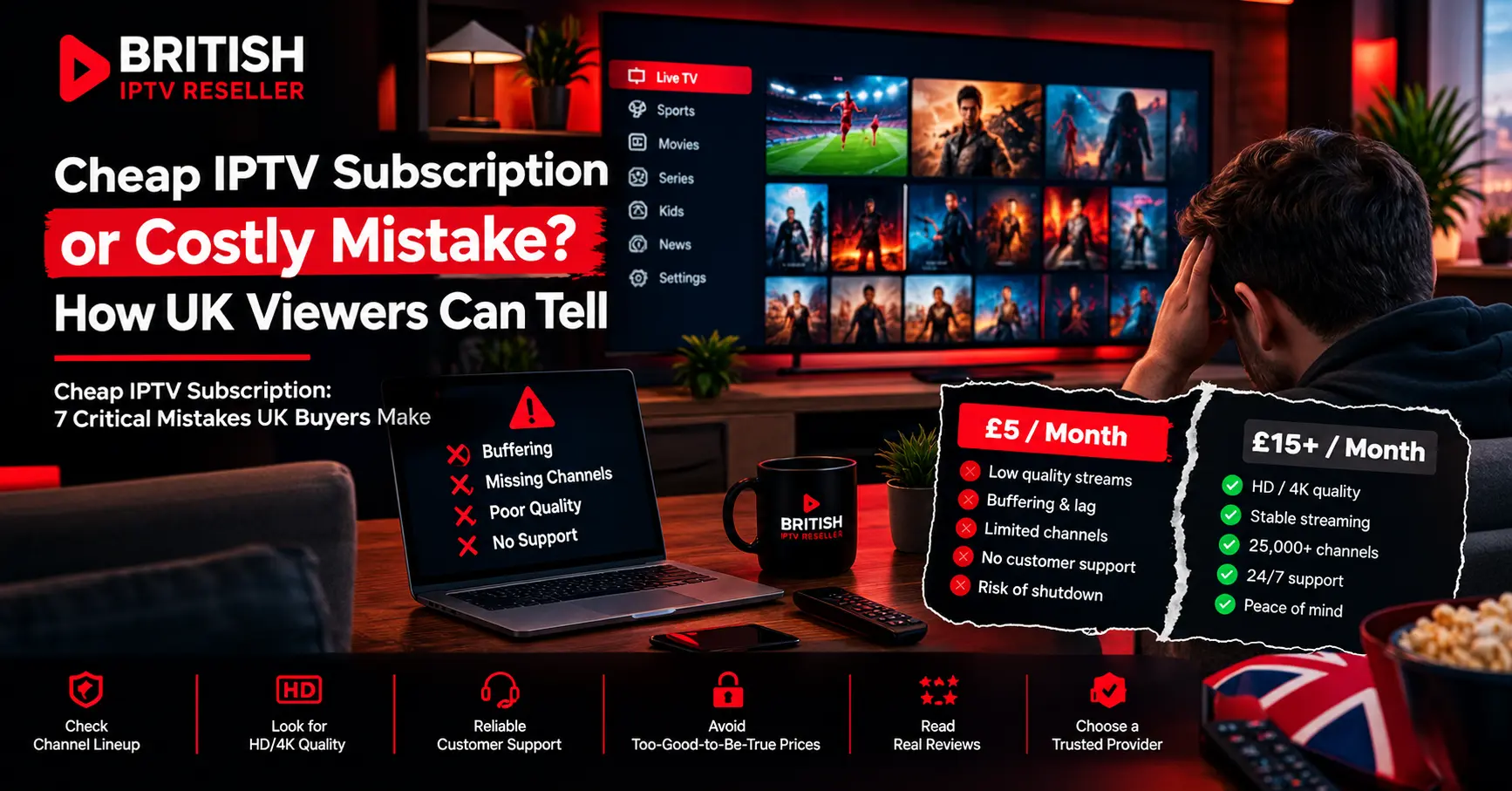
- Falling for “lifetime” plans. No infrastructure survives for a lifetime on a one-off payment of £30 or £40. The maths simply doesn’t work, so the service either vanishes or quietly degrades until you give up on it.
- Paying a full year upfront without a trial. A trustworthy cheap iptv subscription will offer a 24 or 48-hour test, or at the very least a one-month plan. Commit to twelve months only after you’ve watched a busy evening without a single freeze.
- Ignoring the payment method. If the only options are crypto or gift cards, there’s no chargeback when things go wrong. Card payments through a proper processor or PayPal give you a genuine safety net.
- Trusting reviews on the seller’s own website. Glowing testimonials with first names and five gold stars cost nothing to write. Look for independent discussion on Reddit or Trustpilot instead, and read the one-star reviews first.
- Skipping the device test. A service that runs beautifully on an Android box might stutter badly on an older Fire TV Stick or a built-in smart TV app. Test on the device you’ll actually use, whether that’s TiviMate, IPTV Smarters Pro or something else.
- Never asking who’s behind it. A proper iptv service provider has a company name, a contact address and written terms of service. Anonymity is cheap for them to maintain and expensive for you when something breaks.
- Chasing the lowest number in the list. The absolute cheapest offer is rarely the best value. The sweet spot tends to sit a little above the bottom of the market, where margins leave room for support and stable hosting.
If I had to pick the single most damaging mistake, it’s number two. I’ve lost count of the messages from people who paid for a year, lasted six weeks, and then discovered the seller’s Telegram channel had disappeared overnight.
How the Reseller Chain Shapes Your Price
Most people buying a cheap iptv subscription don’t realise they’re rarely buying from the source. The uk iptv market runs largely on a reseller model, and understanding it explains a surprising amount about pricing.
At the top sits the infrastructure owner, running servers and a management panel. Below them, an iptv reseller UK business buys credits in bulk from that panel and sells individual subscriptions to viewers under its own brand. Each credit typically equals one month of access for one connection.
Because resellers buy wholesale, a good one can offer a genuinely affordable cheap iptv subscription while still earning a healthy margin. The trouble starts when a reseller buys from an unstable panel, or undercuts everyone so aggressively that there’s nothing left over for support.
Anyone curious about how that side works in detail should read our White Label IPTV Reseller Guide: Margins, Panels and Trust → / white label iptv reseller. It explains why the same underlying service can appear under a dozen brand names at a dozen different prices.
Why That Matters to You
Two practical consequences follow from all this. First, a lower price from one brand might be the exact same stream as a pricier brand, just with thinner margins. Second, if the panel underneath fails, every brand built on top of it fails at the same moment.
A reputable iptv reseller UK operation will usually tell you, at least in broad terms, how long it’s been trading and how it handles outages. That transparency is worth far more than a £2 monthly discount.
Cheap IPTV Subscription Tiers, Side by Side
To make this concrete, here’s roughly how the market breaks down by price. These are typical monthly equivalents I’ve seen across the uk iptv space, not quotes from any single seller.
| Price band (per month) | What’s usually going on | Typical risk level | Who it suits |
|---|---|---|---|
| Under £3 | Oversold servers, “lifetime” deals, little or no support | High | Honestly, nobody |
| £3 to £6 | A mix of lean resellers and shaky operators | Medium | Buyers happy to trial first |
| £6 to £10 | Established resellers with support and trial periods | Lower | Most households |
| £10 and above | Premium hosting, multiple connections, faster support | Low to medium | Heavy users and families with several screens |
Notice that risk doesn’t keep falling as the price climbs. Past a certain point you’re paying for branding rather than reliability, and a £15 plan from an unknown seller is no safer than an £8 plan from a known one.
For most people, a cheap iptv subscription in the £6 to £10 band strikes the best balance between cost and dependability. That’s still a fraction of what traditional pay TV packages charge, which goes a long way to explaining why the category keeps growing.
Connections Change the Maths
One detail catches out a lot of families. Most plans quote a price for a single connection, meaning one screen streaming at a time, and adding a second or third screen can double or triple the bill.
Check this before you compare prices. A £7 single-connection plan and a £12 two-connection plan are very different propositions if the kids and the grown-ups want to watch different things on the same evening.
Getting the Best From a Budget Plan
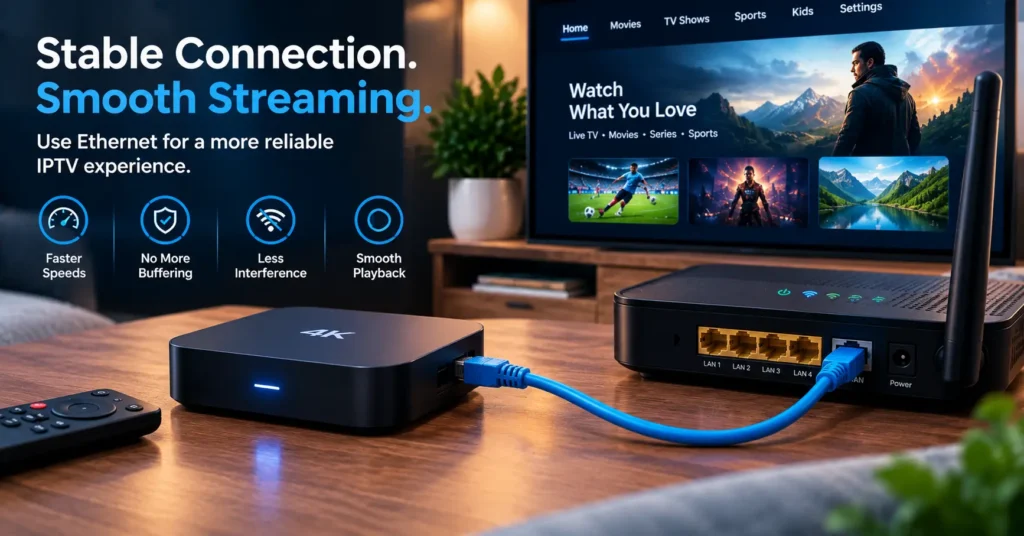
Even the best provider can look terrible on a weak home setup. I once spent twenty minutes on a support chat that ended with the discovery that the customer’s router lived in a cupboard two floors away from the TV.
Wired connections beat Wi-Fi almost every time. If running a cable isn’t practical, a mesh system or a pair of powerline adapters makes a noticeable difference, and a large share of so-called service problems actually start on the home network.
Your player app matters too. TiviMate, IPTV Smarters Pro and GSE Smart IPTV all handle playlists and electronic programme guides differently, and a good cheap iptv subscription should come with setup guides for each rather than a single link and a shrug.
Ofcom’s Connected Nations reports show UK broadband speeds improving year on year, yet plenty of homes still sit on connections that struggle with several HD streams at once. Test your speed at eight in the evening, not ten in the morning, before blaming the service.
A Quick Hypothetical
Imagine two neighbours on the same street. One buys a £25 “lifetime” deal from a social media advert; the other pays £8 a month to a reseller who offered a trial and answered a question within the hour.
By month four, the first neighbour has bought three replacement services and spent an evening each time reinstalling apps. The second hasn’t thought about television logistics once.
Which of them really got the cheap iptv subscription? On paper, the first one did. In practice, the second spent less, stressed less and watched a great deal more.
Your Pre-Payment Checklist
Before you hand over any money, run through this list. It takes five minutes and prevents most of the heartache I’ve described above.
- Ask for a free trial of at least 24 hours and use it during a busy evening
- Check the seller shows a business name, contact details and written terms
- Confirm your payment method offers buyer protection
- Search the brand name on Reddit and Trustpilot, reading the negative reviews first
- Test on the exact device and player app you’ll use every day
- Ask plainly whether the content on offer is properly licensed
- Start on a one-month plan, however tempting the annual price looks
- Message support once before buying and time how long the reply takes
Treat that last point as a small experiment. If a simple question about a cheap iptv subscription takes three days to answer before you’ve paid, imagine how long it’ll take afterwards.
Where This Leaves You
Cheap is fine. Cheap is often smart. What you want to avoid is cheap that’s hiding something, and having read this far, you’ve got everything you need to spot the difference.
My honest advice is to treat a cheap iptv subscription the way you’d treat any other small monthly contract: test it, question it, and don’t lock yourself in until it’s earned your trust. The good providers welcome that scrutiny, and the bad ones tend to vanish the moment you apply it.
And if you’re on the other side of the counter, thinking about becoming a seller rather than a buyer, how to choose an iptv reseller UK panel → / iptv reseller UK panel guide is the natural next read. Whichever side you’re on, go in with your eyes open and your expectations realistic.
Frequently Asked Questions
Is a cheap iptv subscription safe to use in the UK?
Safety comes down to who runs the service far more than the price itself. A plan from a transparent iptv service provider with clear terms, secure payment and licensed content carries much less risk than an anonymous deal promoted through social media. Which? has warned that unofficial apps and devices can carry malware, so stick to reputable player apps from official app stores. If a seller can’t explain what they’re licensed to offer, walk away.
How much should I expect to pay for a cheap iptv subscription?
Around £6 to £10 a month is the range where I see the best balance of price and reliability. Below £3, services are often oversold or short-lived, and support tends to be thin or missing altogether. Above £10, you’re usually paying for extra connections or premium hosting rather than a dramatically better picture. Always compare the monthly equivalent rather than the annual headline figure.
Why do so many uk iptv services look almost identical?
Many of them are built on the same panel and resold under different brand names. That’s simply how the reseller model works: one infrastructure owner, many resellers, each with its own pricing and support style. It isn’t automatically a bad thing, but it does mean one panel outage can knock several brands offline at once. Asking a seller how long they’ve been trading and how they handle downtime gives you a useful clue.
Should I pay for a full year upfront to save money?
Not straight away. Annual plans look like excellent value, yet they only pay off if the service survives the full twelve months. Start with a trial and a one-month plan, test it during busy evenings, and upgrade only once you’ve had a smooth month or two. Most long-term customers I know switched to annual billing in their second year, not their first.
What’s the difference between an iptv service provider and a reseller?
Put simply, the provider runs the infrastructure and the reseller sells access to it. The iptv service provider manages servers, bandwidth and the management panel, while an iptv reseller UK business buys credits in bulk and sells monthly subscriptions under its own brand. Buyers usually deal with the reseller day to day, including for support and billing. A good reseller acts as a filter, choosing stable panels so you don’t have to.